While the increased use of virtual appointments has made care more accessible for many people during the pandemic, it has created challenges for providers who often lack a means to gather basic health data from patients. Advanced Human Imaging Ltd. (AHI), formerly Myfiziq Ltd., tackled the problem with a scanning technology that eliminates the need for basic vital sign equipment during telehealth visits by calculating blood pressure, heart and respiratory rate, and body mass index with a quick scan performed on a smartphone or webcam.
Pulse Medical Imaging Technology (Shanghai) Co. Ltd. has raised more than $100 million in a series C funding round to accelerate the R&D, clinical trials and commercialization of its products. “Pulse plans to use the funds to accelerate the commercialization of its fractional flow reserve (FFR) estimating systems,” Xiaojie Lin, marketing director of Pulse, told BioWorld. FFR is a method to measure blood pressure and flow within a coronary artery to check on the possibility that the stenosis impedes oxygen delivery to the heart muscle.
The FDA reported that Boston Scientific Corp. has recalled several models from the Ingenio line of cardiac electrophysiology devices in a class I action that affects 48,000 devices. The recall was triggered by the risk that these devices will inappropriately shift into safety mode and thus be unable to provide pacing, as demonstrated by 65 such incidents and three instances in which patients needed external pacing in response to the problem.
Catheter ablation for atrial fibrillation has enjoyed an uneven reputation at best over the years, but the prospect of eliminating anti-arrhythmic drugs has proven difficult for both patients and clinicians to ignore. A new analysis of data from the Catheter Ablation vs. Antiarrhythmic Drug Therapy for Atrial Fibrillation (CABANA) study seems to answer the cost effectiveness question for ablation, however, representing yet another piece of evidence that should support increased sales of these devices in the coming years.
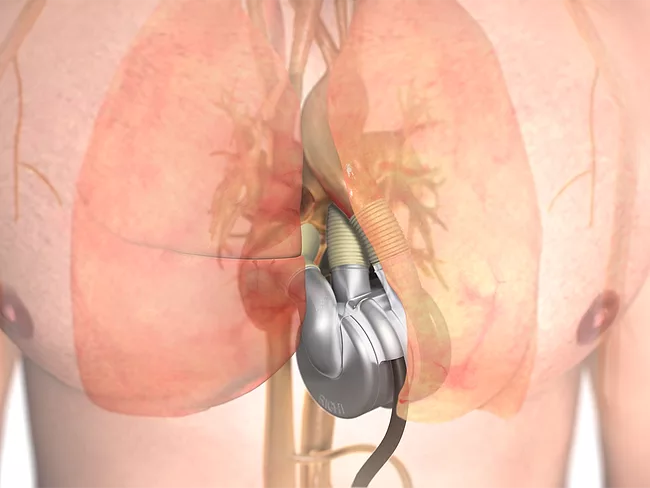
PERTH, Australia – The Australian government’s Medical Research Future Fund (MRFF) has funded a new program called the Artificial Heart Frontiers Program that aims to develop and commercialize a world-first durable total artificial heart. The Medical Research Future Fund has provided A$1 million (US$739,000) in funding that will establish the program over the next five years.
Microport Scientific Corp.’s cardiac rhythm disorders subsidiary, Microport Cardiac Rhythm Management Ltd. (Microport CRM), has confirmed agreements for a series C financing that would net it total investment proceeds of $150 million. Hillhouse Capital Group and Microport will co-lead the series C investment with investments of $20 million and $47 million, respectively.
Abbott Laboratories has secured FDA clearance for its latest optical coherence tomography (OCT) imaging platform powered by the company’s new Ultreon software. The artificial intelligence (AI)-powered imaging software allows doctors to view coronary blood flow and blockages more clearly, aiding in care management and treatment decisions.
Biofourmis Inc. won a breakthrough devices nod from the FDA for its Biovitalshf solution, a digital therapeutic for patients with heart failure with reduced ejection fraction (HFrEF). The company, which is pursuing the de novo pathway for the therapy, plans to launch a pivotal trial next month. Biovitalshf is intended to augment guideline-directed use of heart failure medications to manage patients in combination with traditional pharmacotherapy. The software application integrates physiological monitoring, symptoms and signs reporting, patient engagement, medication management and communications to provide clinicians with personalized and specific recommendations about their medication.
Medtronic plc got a thumbs up from the FDA for two Accurhythm algorithms to detect atrial fibrillation and asystole in patients who have heart rhythm abnormalities. The new artificial intelligence (AI)-based algorithms are designed for use on the company’s Linq II insertable cardiac monitor (ICM). Dublin-based Medtronic said the Accurhythm AI algorithms will be available on its Carelink Network later this year for use with all implanted Linq II devices in the U.S.
Medtronic plc launched the newest product in its coronary portfolio, the Prevail drug-coated balloon (DCB) catheter, in Europe following CE mark approval. The device is intended for use during minimally invasive procedures to open narrowed or clogged arteries in patients with coronary artery disease.
 RSS
RSS