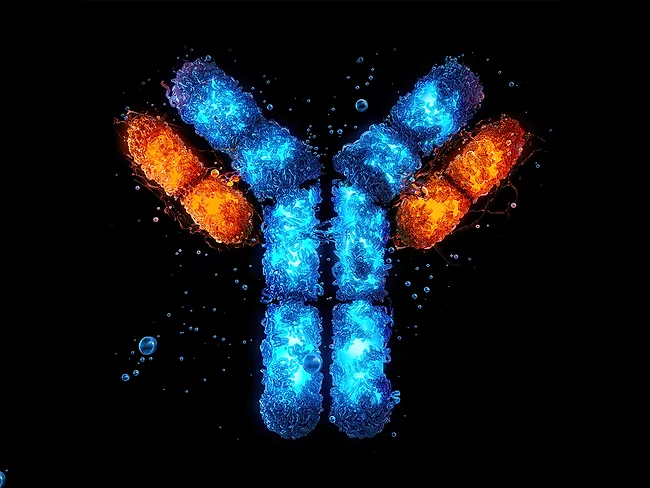
Boehringer Ingelheim Pharma GmbH & Co. KG and Immunitas Therapeutics Inc. have signed a global licensing agreement for a preclinical antibody program being developed for chronic inflammatory and autoimmune diseases.
AOP Orphan Pharmaceuticals GmbH (AOP Health) has established a strategic partnership with VRG Therapeutics Zrt to advance a novel Kv1.3 potassium channel inhibitor for use in inflammation and immunology indications.
Raising $279 million in an IPO and another $25 million in a concurrent private placement, Odyssey Therapeutics Inc. is advancing its lead phase II asset, OD-001, in ulcerative colitis, with plans to bring its SLC15A4 program into the clinic for lupus.
Avalo Therapeutics Inc. may have designed in lead asset abdakibart, a drug for hidradenitis suppurativa (HS) that offers a novel mechanism of action, wide dosing interval, and more-than-satisfying outcomes on the Hidradenitis Suppurativa Clinical Response 75 endpoint, just what the doctor – and Wall Street – ordered.
A team at the Korea Research Institute of Chemical Technology has synthesized tetrahydroisoquinoline- or isoindoline-substituted [1,2,4]triazolo[1,5-a]pyridine derivatives acting as tyrosine-protein kinase JAK1 inhibitors.
The classic origin story for a biotech startup is that of a scientist who nurtures his work out of a university and to commercial success. For Link Biologics Ltd. and its TSG6-based pipeline, the story is the other way around; it began with now-CEO Reuben Dawkins meeting University of Manchester scientists Tony Day and Caroline Milner while he was on the lookout for “great science that needs help to make it to patients.” The three are now co-founders of Link, which spun out of the University of Manchester in 2021 and has four programs in three indications, all based on TSG-6 biology.
Evotec SE has announced the nomination of a small-molecule preclinical development candidate from its multi-target drug discovery alliance in medical dermatology with Almirall SA. The program is aimed at developing novel treatments for immune-mediated inflammatory skin diseases with high unmet medical need. The collaboration, established in 2022, leverages Evotec’s fully integrated, AI/machine learning enhanced discovery and preclinical development platforms.
Ono Pharmaceutical Co. Ltd. has synthesized bridged bicyclic compounds acting as endosomal/lysosomal proton channel TMEM175 activators. As such, they are described as potentially useful for the treatment of inflammatory disorders, lysosomal storage diseases, autoimmune disease and Parkinson’s disease.
Activating the aryl hydrocarbon receptor (AhR) in immune cells enhances anti-inflammatory pathways and limits pathogenic immune responses. Equillium Inc. has recently presented data for their AhR agonist EQ-504 for the potential treatment of immune-related diseases.
A new molecule combines the action of two incretins, GLP-1 and GIP, hormones that regulate glucose and appetite, with lanifibranor, a triple agonist of peroxisome proliferator activated receptors (PPAR α/γ/δ). GLP-1-GIP-Lani enables targeted delivery of the PPAR agonist to cells that express incretin receptors, enhancing weight loss, improving glucose control and reducing inflammation in obese mice. In these models, it surpassed the effects of GLP-1 receptor agonists such as semaglutide and GLP-1-GIP co-agonists such as tirzepatide in reducing body weight, improving glycemic control and enhancing metabolic outcomes during active treatment.
 RSS
RSS