Stimvia s.r.o. (previously Tesla Medical s.r.o.) is in the process of securing $10 million in investment in a series A financing round that will allow the company to conduct a pivotal clinical study addressing overactive bladder, using Uris, its neuromodulation system, CEO Lukas Doskocil told BioWorld.
Laborie Medical Technologies Inc. continued a string of recent deals with an agreement to acquire Urotronic Inc. for $255 million cash up front with an additional $345 million in payments contingent on meeting specified commercial and reimbursement milestones. Laborie already held a minority interest in the manufacturer of the Optilume drug-coated balloon technology for treatment of urethral strictures and benign prostatic hyperplasia (BPH).
Amber Therapeutics Ltd. has acquired Bioinduction Ltd. as well as its neuromodulation therapy platform, Picostim Dyneumo. Amber is currently using the platform, an implantable system to deliver its closed-loop therapy for mixed urinary incontinence, Amber-UI, in a first-in-human study. With early indications confirming the safety and feasibility of the surgical procedure and adaptive therapy, it made sense to acquire the hardware which allows for the therapy to work, CEO Aidan Crawley, CEO and co-founder of Amber told BioWorld.
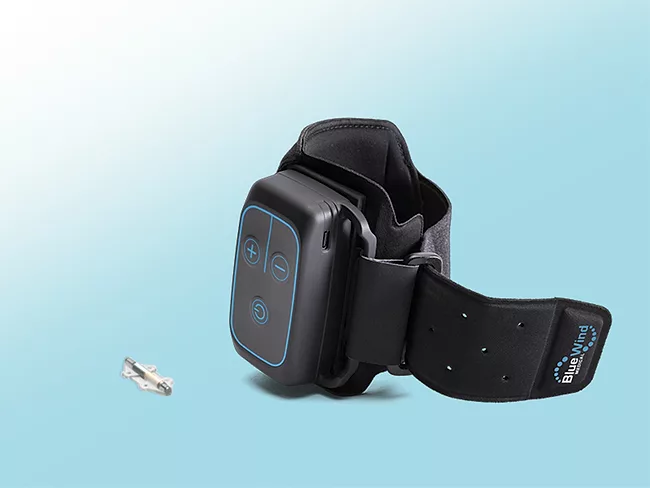
The U.S. FDA granted the de novo marketing request for Bluewind Medical Ltd.’s Revi system for the treatment of urgency incontinence with or without urinary urgency, the company reported on August 17. Unlike other neuromodulation devices approved in recent years, Revi stimulates the tibial nerve instead of the sacral nerves.
A new bacteriophage-based rapid test has the potential to identify the specific pathogen causing a urinary tract infection (UTI) at the point of care, enabling targeted use of antibiotics.
The test uses naturally occurring phages identified as predators of Escherichia coli, Klebsiella and Enterococci that are genetically modified to make any bacterium they invade bioluminescent.
In a proof-of-concept study, researchers at ETH Zurich, Switzerland, were able to reliably detect the pathogenic bacteria in a urine sample in less than four hours. That compares to the 18 – 30 hours it takes to culture samples in a central lab and to identify a specific microbe using conventional diagnostics.
Rockwell Medical Inc. has acquired the hemodialysis concentrates business of Evoqua Water Technologies LLC for $11 million up front in cash plus two $2.5 million milestone payments at 12- and 24-months following the close of the deal.
Olive Diagnostics Pvt. Ltd. is looking to raise $10 million in a series A funding round to extend sales and marketing activities, after getting CE approval for its urine analysis device that mounts on any toilet. Among other parameters the device, Olive KG, can measure red blood cells, proteins, nitrates, pH levels volume, pressure and frequency of urination.
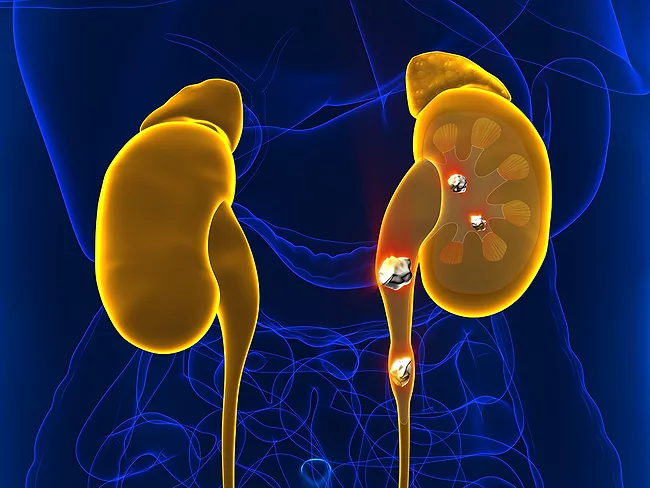
Calyxo Inc. cleaned up with a $32.7 million series C financing round to support further development of the Cvac system for kidney stones. Questa Capital and CRG led the round, which brought the company’s total funds raised to $47.2 million.
The FDA has approved Medtronic plc’s next-generation sacral neuromodulation (SNM) system, Interstim X, giving patients a recharge-free option with a 10-year+ lifespan. This newest member of the Interstim portfolio joins the rechargeable Interstim Micro as a treatment for overactive bladder (OAB), chronic fecal incontinence (FI) and nonobstructive urinary retention.
Easyendo Surgical Inc. has won the South Korean Ministry of Food and Drug Safety’s (MFDS) latest breakthrough device designation for its robotized ureteroscope. The device, currently known as Easyuretero, is the first of its type to be developed in South Korea. The next goal for Easyendo will be regulatory approval, said the MFDS. Daejeon, South Korea-based Easyendo is already working towards winning that approval. “We are now preparing to start clinical trials in South Korea, and discussing the start date and scope of the trials with MFDS,” an Easyendo spokesperson told BioWorld.
 RSS
RSS