Oxford University has opened the doors to its new Pandemic Sciences Institute, a £100 million (US$119.5 million) initiative to build on the research and experience of COVID-19, to counter future pandemic threats.
Immunovia AB is progressing a study evaluating its Immray Pancan-d blood test for the early detection of pancreatic cancer in patients with new onset type 2 diabetes. Studies have found that type 2 diabetes is a major risk factor for developing pancreatic cancer, and the screening of molecular biomarkers may help patients access treatment before they develop symptoms. The company’s lab-developed test (LDT) measures nine serum biomarkers that, when combined in an algorithm, can detect pancreatic ductal adenocarcinoma.
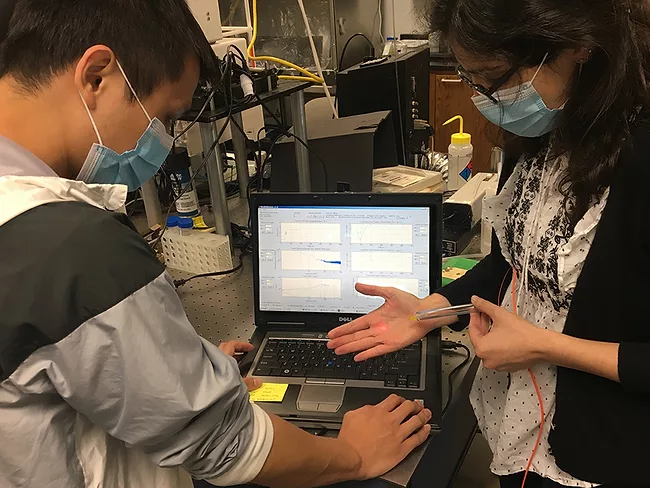
The University of Central Florida (UCF) and Orlando Health are testing new medical technology designed to identify blood clots more quickly in surgery. The monitoring device consists of a small optical fiber that uses red blood cells to track the process of blood coagulation in patients so doctors can watch for life threatening blood clot formation.
Ceros Capital Markets and Peregrine Ventures evidently liked what they heard about Cordio Medical Ltd.’s Hearo voice app that can detect deterioration in patients with congestive heart failure (CHF), leading them to invest $18 million in the company’s latest venture funding round.
Patent disputes between developers of medical software might not have kept pace with the rate of disputes over in vitro diagnostic patents, but Alivecor Inc. and Apple Inc. are doing their share to keep software patents in the news. In the latest development, Mountain View, Calif.-based Alivecor reported that it won an initial determination of infringement of one of its patents by Apple Inc., of Cupertino, Calif., which could lead to an exclusion order for Apple watches if the case ultimately goes Alivecor’s way.
 RSS
RSS