The FDA reported a class I recall of the Wirion embolic protection device by Cardiovascular Systems Inc. (CSI), of St. Paul, Minn., due to reports of nine instances of device malfunction. The agency said the filter portion of the device can be difficult to withdraw under some circumstances and thus lead to separation, although the FDA noted that no deaths have been reported in association with the issue despite the risk of embolization. The FDA’s device center also posted a Jan. 11 notification against the use of two tests by Lusys Labs Inc., of San Diego, for the SARS-CoV-2 virus.
Where’s the plan? That was the underlying question Jan. 11 as Biden administration health officials faced frustration and tough questions from both Democrats and Republicans on the Senate Health, Education, Labor and Pensions (HELP) Committee about how the U.S. government is responding to the surge of COVID-19 infections caused by the omicron variant.
In vitro diagnostic (IVD) company Virtue Diagnostics (Suzhou) Co. Ltd. has raised $100 million in a series B round to develop its clinical diagnostics and bring them to other markets. “With the latest funding, Virtue Diagnostics will hire talent, introduce technology, and expand to other markets,” said Johnson Zhang, CEO of Virtue Diagnostics.
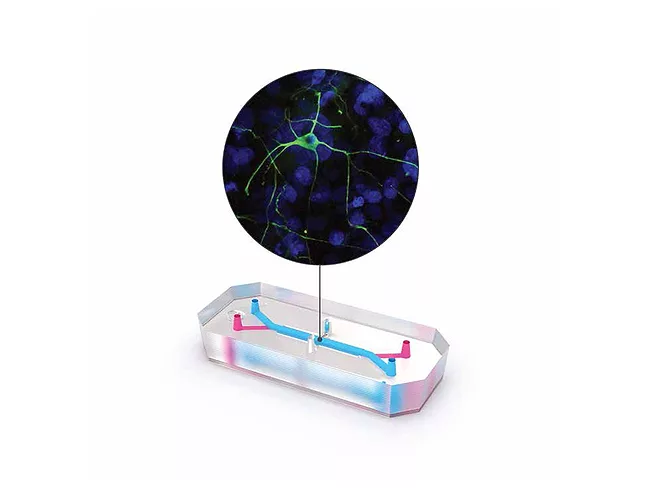
Space travel has known effects on human health and biology. Some, such as loss of bone density, are well understood, while others, like inflammation, are not. Now, organ-on-a-chip maker Emulate Inc. is conducting experiments on the International Space Station U.S. National Laboratory (ISS-NL) aimed at revealing clues to how the brain functions in microgravity.
University of California San Diego engineers have developed tiny 2D sensors that pop up to become a 3D assemblage of microscopic sensors for directly measuring the movement and speed of electrical signals inside the heart. According to nanoengineering professor Sheng Xu, the nanotechnology has enormous implications for heart doctors anxious to better diagnose and treat arrhythmia, heart attack and other diseases.
Cancer trials that stratify patients using biomarkers increase their likelihood of proceeding to the next phase more than 500% compared to trials run without biomarkers, Canadian researchers recently determined, and biotech companies have invested heavily in identifying new biomarkers for a wide range of applications. Genialis Inc. has tackled the problem of huge investment in biomarkers with little return by developing a platform that combines artificial intelligence and machine learning.
The epic rise and fall of Elizabeth Holmes, founder of Theranos Inc., will preoccupy the world of business for decades to come, but this story has also left a large footprint in the world of clinical diagnostics. David Stein, CEO of Babson Diagnostics Inc., of Austin, Texas, told BioWorld that investors are a bit more wary than usual because of the Theranos saga, forcing test developers to be more rigorous in test development and more transparent with investors about a test.
Investors including SOSV, Cultivate(MD), Wavemaker360 Health, Blu Venture Investors and Broad Street Angels are backing Strados Labs LLC with $4.5 million. The pre-series A funding will be used to accelerate development of the company’s smart sensor platform Resp. The funding comes after Strados received FDA clearance for the product in December 2021 and brings its total raised to $7 million.

 RSS
RSS