Synaptive Medical Inc., of Toronto, has secured Health Canada’s approval for Evry, the company’s superconducting head magnetic resonance imaging (MRI) system. The Evry system aims to provide imaging directly at the point of care in areas outside diagnostic imaging departments.
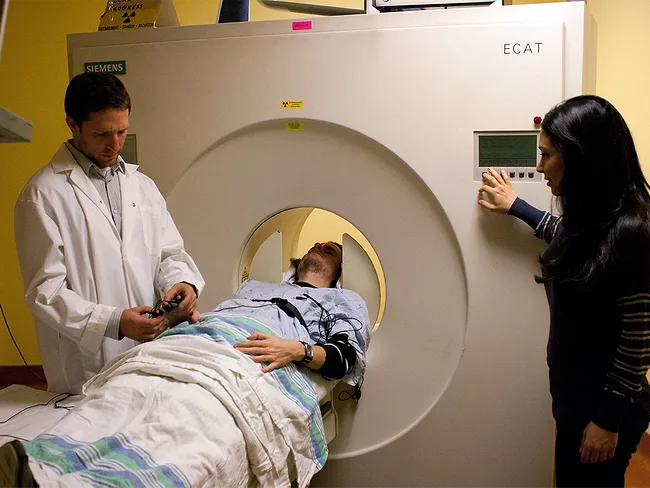
TORONTO – Montreal’s McGill University and the Montreal Neurological Institute-Hospital (The Neuro) have entered a research agreement with Pasadena, Calif.-based Fuzionaire Diagnostics Inc. to detect and treat neurodegenerative diseases through molecular imaging.
San Diego-based Cortechs Labs Inc. has developed an automated PET image analysis tool that identifies changes in specific brain structures associated with Alzheimer’s disease, vascular dementia, epilepsy, multiple sclerosis and other neurological disorders.
Artificial intelligence still has a lot to prove when it comes to its relevance in improving health care. But one bright spot was a deal last July between Dublin-based Medtronic plc and San Francisco-based startup Viz.ai Inc. to use the latter’s AI system that’s designed to spot a large vessel occlusion automatically in CT angiogram images.
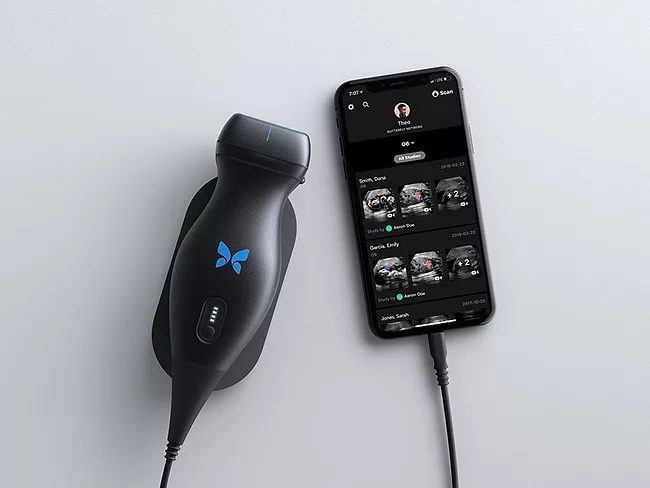
The second day of the FDA workshop on artificial intelligence (AI) in health care featured several interesting proposals, including that AI will be used in health care without the aid of a health care professional. John Martin, chief medical officer at Butterfly Network Inc., of Guildford, Conn., said the time is ripe for AI-assisted ultrasound in the home, which he claimed could reduce rehospitalizations in heart failure, one of the holy grails in U.S. government efforts to restrain health care spending growth.
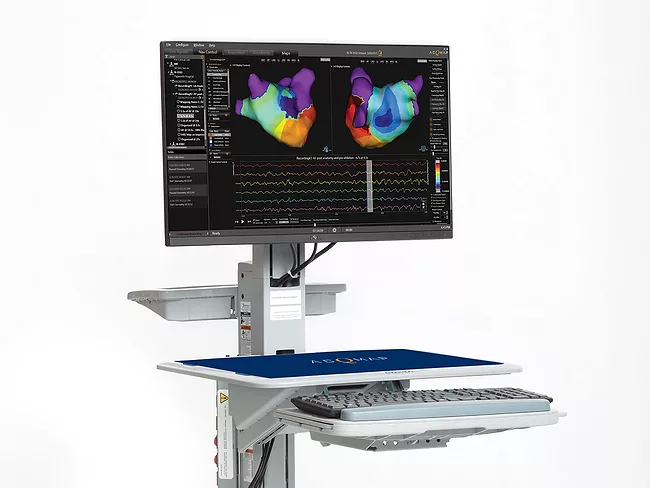
Acutus Medical Inc. is working to build itself into a major competitor in cardiac electrophysiology. The latest step to do so is an FDA clearance for its second-generation cardiac mapping software known as Supermap. This works in conjunction with its next-gen Acqmap 3D Imaging and Mapping System. The Carlsbad, Calif.-based startup, which was founded in 2011, is now marketing these in both the U.S. and Europe, where Supermap received a CE mark in October 2019.
Ferrum Health Inc., of San Francisco, is looking to prevent medical errors with the help of artificial intelligence (AI). That caught the eye of Sutter Health, a not-for-profit health care network in Northern California. To that end, the two have unveiled the debut of Ferrum's AI-powered platform as the system to deliver more consistent care to patients.
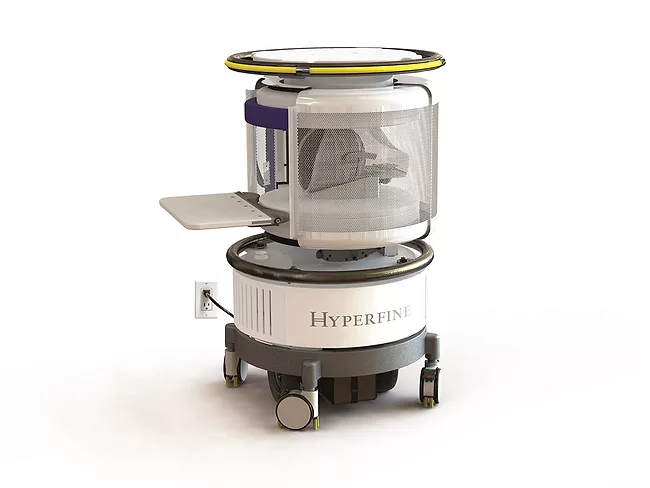
Guilford, Conn.-based Hyperfine Research Inc. has received the U.S. FDA’s nod for a bedside magnetic resonance imaging (MRI) system and is eyeing this summer for shipments. The portable system can be wheeled directly to the patient’s bedside and plugs into a standard electrical wall outlet.
The Dec. 9, 2019, FDA draft guidance spelling out performance criteria for magnetic resonance coils seemed to take up a relatively simple matter, but industry’s response suggested otherwise. The Medical Imaging & Technology Alliance (MITA) recommended that the agency undertake nearly two dozen changes to the draft, including a change to the title to indicate that the scope of the guidance is limited to receive-only MRI coils.
Palo Alto, Calif.-based Varian Medical Systems Inc. has won the U.S. FDA’s nod for its Ethos therapy, an artificial intelligence (AI)-driven holistic solution that is aiming to transform cancer care. This solution is designed to deliver an entire adaptive treatment in a typical 15-minute slot and is intended to put the patient at the center of care, noted Chris Toth, president of Varian Oncology Systems.
 RSS
RSS