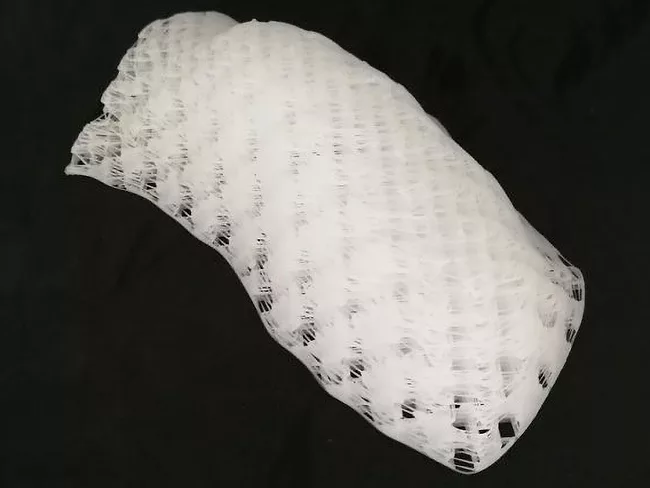
PARIS – Bellaseno GmbH reported publication of first-in-human data for its 3D-printed biodegradable and highly porous Senella scaffold filled with autologous fat graft to correct a chest deformation in a 22-year-old patient with severe pectus excavatum. The article was published in the European Journal of Plastic Surgery.
At long last, the FDA has released information on a potential regulatory framework for 3D device printing at the point of care (POC), just the first step in the implicit guidance development process. The document highlights several potential tripwires for device manufacturers and operators of health care facilities, but the large number of complex questions posed by the paper suggests that a final guidance is not likely to arrive any time soon.
The Royal Academy of Engineering in the U.K. has selected 15 entrepreneurs from seven different countries for the latest edition of its Leaders in Innovation Fellowships Advance (LIF Advance) program, including some that offer med-tech solutions.
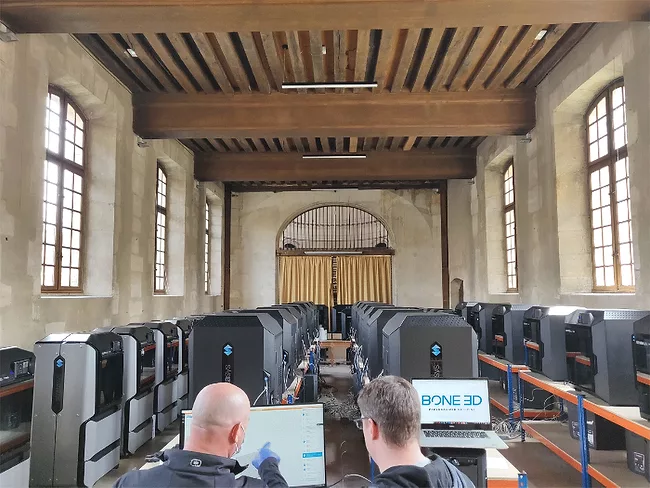
PARIS – Bone 3D SAS has signed a partnership with Stratasys Ltd. to put 3D printing technology directly into the hands of all 3,000 French hospitals and their front-line medical professionals. This new service, called Hospifactory, makes it possible to leverage additive manufacturing to produce medical equipment and devices directly on site at the hospital.
3D Systems Inc. acquired Volumetric Biotechnologies Inc. as part of its plan to expand its organ bioprinting program. The deal entails a $45 million upfront payment with an additional $355 million linked to meeting milestones “planned between now and 2035, and aligned with key points in the development process,” Volumetric President and CEO Jeffrey Graves told BioWorld. Houston-based Volumetric has focused on building replacement organs through bioprinting and created an approach that produces complex vasculature using light-based bioprinting.
PERTH, Australia – Singular Health Group Ltd. was awarded AU$50,000 (US$37,000) in funding from Australia’s Commonwealth Scientific and Industrial Research Organization’s (CSIRO) Kick-Start program to undertake a research project to develop artificial intelligence (AI)-based tools to automatically design patient-specific cranial implants. The AI will be integrated into Singular Health’s surgical planning software for editing before the cranial implants are 3D printed.
LONDON – Birmingham University spinout 4D Biomaterials Ltd. has raised initial funding of £1.6 million (US$2.2 million) to commercialize a new shape-changing biopolymer for use in soft tissue repair.
PERTH, Australia – Researchers at RMIT University and St. Vincent's Hospital in Melbourne have flipped traditional 3D printing to create more intricate biomedical structures, advancing new technologies for regrowing bones and tissue. Instead of making the bioscaffolds directly, the team 3D printed molds with intricately patterned cavities and then filled them with biocompatible materials, before dissolving the molds away.
TORONTO – Femtherapeutics Inc. is combining artificial intelligence-driven machine learning and 3D design to manufacture a device for relieving urinary incontinence and discomfort in women suffering pelvic organ prolapse. The custom-made pessary is intended to support vaginal tissues displaced because of the condition, replacing conventional pessaries that company officials said can result in irritation and penetrate soft tissues causing bleeding.
A new 3D printing technique has allowed University of Nottingham researchers to tailor-make artificial body parts and other medical devices that are both implantable and bacteria-resistant. The multi-materials manufactured in the study were also adapted to 3D printing technology that is able to offer devices that can better meet the need of the patient and minimize the surgeries led by device failure that increase the risk of infections.
 RSS
RSS