Biointellisense Inc. received good news from the U.S. FDA, which gave its nod to the company’s Biosticker on-body sensor for scalable remote care. The Biosticker allows for continuous monitoring of vital signs and actionable insights, delivered to clinicians from patients in the home setting. The goal is to help in the early detection of potentially avoidable complications.
SANTA CLARA, Calif. – Translating novel technology into the care delivery system is not easy, according to Maulik Majmudar, medical officer at Bellevue, Wash.-based Amazon.com Inc. In fact, he said at the Precision Medicine World Conference that “it’s a hot mess.” In his presentation, Majmudar spoke about the classic barriers that prevent technologies from getting adopted at scale in a timeline that's usually feasible for early- and mid-stage startups – and even for large companies – and developing strategies to overcome those challenges.
SANTA CLARA, Calif. – Diabetes seems likely to be the first area to really show concrete products and results for the ambitious Verily Life Sciences, which is the med-tech business of Mountain View, Calif.-based Google parent Alphabet Inc. However, its two major diabetes partners both have been rethinking the relationship.
SANTA CLARA, Calif. – While many of the presentations at the Precision Medicine World Conference revolved around clinical studies and their promise for future breakthroughs in health care, a continuous stream of companies made their pitches for translating these studies into actual products that can benefit patients now.
PARIS – EY SAS has published the results of the first edition of a barometer dedicated to the role of artificial intelligence (AI) in French public hospitals. The health care sector, which is undergoing wholesale change in France, is suffering tight economic constraints and faces ever-increasing expectations from patients. “The development of [AI] in France is a priority. It's a matter of gauging it,” Loïc Chabanier, an EY partner responsible for health care, told BioWorld.
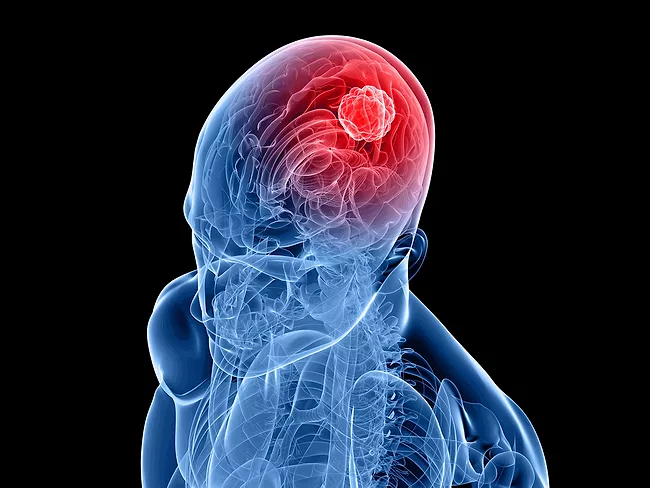
Unlike with other kinds of cancer, there’s no opportunity for a biopsy ahead of surgery for a suspected brain tumor. To help matters, researchers have developed a novel approach that combines a new, commercially available imaging technology – stimulated Raman histology (SRH) – with an artificial intelligence (AI) algorithm to offer a diagnosis of brain tumors in just a couple of minutes. They published the results of a study in the Jan. 6, 2020, issue of Nature Medicine that determined their approach was noninferior to standard pathologist interpretation of histologic images.
LONDON – Oviva AG has raised US$21 million in a series B funding to further advance commercialization of its digital diabetes treatment program across Europe.
PERTH, Australia – Australia’s Parliament has passed the first tranche of medical device regulations reforms that follow a number of consultations over the last two years.
HONG KONG – South Korean med tech Olive Healthcare Inc. has attracted ₩8 billion (US$6.91 million) in series B funding. The Seoul-based company is focused on abdominal fat scanning and breast cancer diagnosis, using nonradiative and noninvasive near infrared (NIR) technology, artificial intelligence (AI) algorithms, and big data processing for a customized medical service.
SAN FRANCISCO – Insulet Corp. aims to get an FDA approval this year and launch its first interoperable device, the cord-free, wearable insulin device Omnipod Horizon. It is designed to be compatible with the Dexcom G6 and is the result of a partnership between the two companies. In combination, the devices will operate as a closed loop system to automatically adjust insulin dosage over time in response to blood glucose levels.
 RSS
RSS