Rakuten Medical Inc. is advancing a pipeline of solid tumor therapeutics built on its Alluminox platform worldwide, having gained conditional early approval of ASP-1929, an Alluminox-derived photoimmunotherapy, in Japan in 2020.
Jiangsu Hengrui Pharmaceuticals Co. Ltd. struck another $1 billion-plus deal, this time for a HER2-targeting antibody-drug conjugate (ADC), trastuzumab rezetecan (SHR-A1811), with Glenmark Pharmaceuticals Ltd.’s subsidiary Glenmark Specialty SA.
As Royal Philips NV works to rebuild trust after a global device recall, it is investing in new models of access, affordability, and technology to close gaps in sleep apnea diagnosis and therapy across Asia.
As is the case with the Made in China 2025 initiative, the Make in India program has at least a decade of history to look back on, with some benefits accruing to the nation’s med-tech sector. All the same, Gunjan Bagla, CEO of Los Angeles-based Amritt Inc., told BioWorld that the initiative could be more successful if the legislature would tweak the laws to create a more helpful environment for industry.
China’s National Medical Products Administration is arguably more active than regulatory agencies in many nations in advancing guidance for AI in medical technology, but Chang-Hong Whitney, President/CEO of Whitney Consulting Ltd., told BioWorld that the premarket review process still carries some unpredictability.
Japan’s Pharmaceuticals and Medical Devices Agency has traditionally been less than receptive to clinical data from other nations, but that aversion is slowly giving way. Ames Gross of Pacific Bridge Medical told BioWorld that a trial conducted in another nation with significant representation of those of Japanese ancestry can go a long way toward obviating the need for a trial conducted in Japan.
Amyotrophic lateral sclerosis (ALS), formerly known as Lou Gehrig’s disease, is a progressive and fatal neurodegenerative disorder with no known cure. While three therapies have gained U.S. FDA approvals to date, including Rilutek (riluzole), Radicava/Radicava ORS (edaravone) and tofersen (BIIB-067, the lack of a disease-modifying drug has spurred the continual search for novel therapies.
Patients with relapsed/refractory multiple myeloma (r/r MM) treated with Carsgen Therapeutics Holdings Ltd.’s CAR T therapy, zevorcabtagene autoleucel (zevor-cel, CT-053), have shown durable responses lasting nearly five years.
Mabwell Bioscience Co. Ltd. and Aditum Bio Management Co. LLC announced, in after-market hours Sept. 17, an agreement to forge a new company called Kalexo Bio Inc. and load the biotech with a preclinical dyslipidemia asset via a potential $1 billion global license deal.
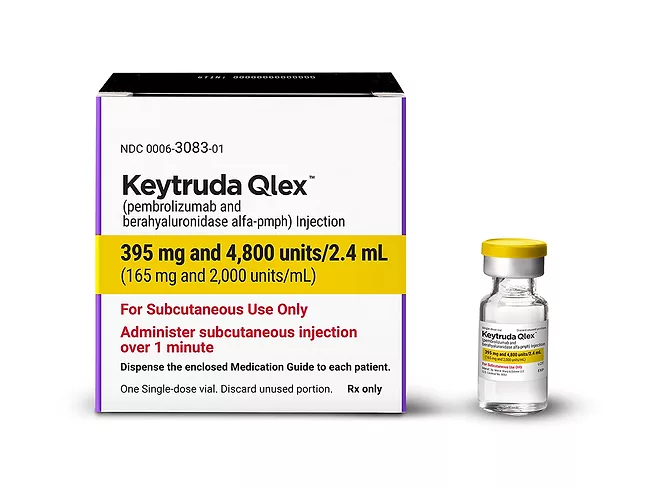
The U.S. FDA approved Merck & Co. Inc.’s Keytruda Qlex (pembrolizumab and berahyaluronidase alfa-pmph) injection on Sept. 19, making it the first and only subcutaneously (SC)-administered immune checkpoint inhibitor that can be administered in about a minute.
 RSS
RSS