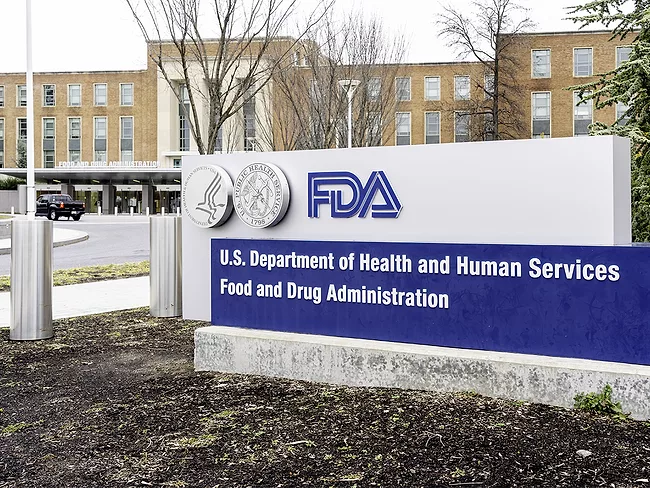
The FDA lost another hearing in the lawsuit filed against the agency by Genus Medical Technologies LLC in a case that yet again resurrects the product classification question. Both courts that heard the lawsuit asserted that the FDA does not enjoy unfettered discretion to classify a device as a drug merely as part of its authority under the Administrative Procedures Act (APA).
Agnovos Healthcare LLC, a company using regenerative medicine to treat localized effects of bone disease, has received the FDA’s nod for an IDE clinical trial to assess its AGN1 local osteo-enhancement procedure (LOEP) small-volume (SV) kit in patients with vertebral compression fractures (VCFs). The investigational device is intended to treat stable but painful VCFs via a minimally invasive procedure. The kit, which comes in the form of two single-use trays, contains a calcium-based, resorbable, triphasic implant material that is designed to align the pace of resorption with bone formation, providing treated vertebrae with immediate and durable protection.
If the FDA follows the advice of its Cellular, Tissue and Gene Therapies Advisory Committee, the U.S. could soon see its first approved islet transplant therapy, but few expect it to be broadly used. The adcom voted 14-9 April 15, with one abstention, that Celltrans Inc.’s donislecel, or cadaveric allogenic pancreatic islet cells, has an overall favorable risk-benefit profile for some patients with type 1 diabetes.
The FDA has finalized a 2018 draft rule that excludes several digital products from the definition of a medical device, a list that includes medical device data systems (MDDS) used in hospitals. The rule responds to requirements spelled out in the 21st Century Cures Act, which was signed into law in late 2016, making this a project of nearly five years’ duration on the FDA’s part.
The Biden administration’s fiscal 2022 budget proposal included an allocation for an office described as the Advanced Research Projects Agency – Health, or ARPA-H, which would receive $6.5 billion as part of the National Institutes of Health.
The latest global regulatory news, changes and updates affecting medical devices and technologies, including: FDA reverses HHS premarket notification exemptions; ITC will check findings for Zimmer/Heraeus dispute.
The U.S. Centers for Medicare & Medicaid Services (CMS) has decided to leave the onus on Medicare administrative contractors (MACs) to make coverage determinations regarding the Allomap test for heart transplant rejection despite a request for a non-coverage policy. As was the case in the decision to allow MACs to determine coverage for total artificial hearts, the CMS said that the low annual rate of utilization of the Allomap, by Caredx Inc., of Brisbane, Calif., suggested that the MACs are in a better position to make the appropriate call regarding coverage.
The COVID-19 pandemic’s direct and indirect toll on the human condition is beyond calculation, but the effect on FDA regulatory activity is easier to assess. The problem for device makers is that a number of draft and final guidances are stuck in a pandemic-driven regulatory limbo, which seemingly guarantees that some compliance and product development efforts will run afoul of the agency’s expectations and potentially delay a product’s market access.
The Biden administration has released an exceedingly brief budget framework for fiscal year 2022 that includes $6.5 billion for an advanced research program at the NIH, which mimics a similar program at the Department of Defense (DoD). Beyond that, there is a clear indication that the CDC would see an uptick in monies, but the proposal offers no numbers for the FDA budget, making this one of the skinnier budget proposals to come out of the White House in recent memory.
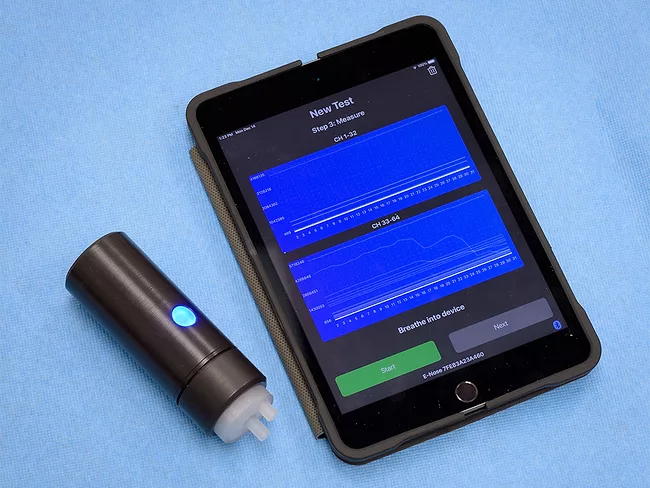
NASA is ready to begin testing the E-Nose COVID-19 screening device prototype developed by subcontractor Variable Inc., of Chattanooga, Tenn. NASA received $3.8 million from the Department of Health and Human Services to enhance E-Nose, which was originally developed to measure air quality inside spacecraft. The updated version is intended to facilitate screening for SARS-CoV-2 by "sniffing out" the signature volatile organic compounds (VOCs) in the breath of infected individuals.
 RSS
RSS