The Centers for Medicare & Medicaid Services (CMS) proposed a rule June 12 that would codify the Inflation Reduction Act of 2022’s Medicare Drug Price Negotiation Program, establish new negotiation and drug benefit policies, and modify the fixed combination drug policy – the latter of which would negatively impact biopharmas attempting to extend lifecycles of blockbuster products.
Eli Lilly and Co. lost its bid to have the U.S. Supreme Court strike down the whistleblower provisions in the False Claims Act (FCA) as unconstitutional.
It looks like the end of the road for many of the court challenges to the Inflation Reduction Act’s (IRA) provision requiring Medicare to negotiate prescription drug prices. The U.S. Supreme Court denied cert May 18 to petitions brought by six biopharma companies that raised questions about the constitutionality of the negotiations. All but one of the suits involved were denied in the Third Circuit; the other one was denied in the Second Circuit, so there is no circuit split – yet.
Regulatory uncertainty that dominated the life science sector in 2025 is transitioning into an execution framework for biotechnology companies, provided companies can tailor regulatory strategies early, and across the entire development cycle.
Regulatory uncertainty that dominated the life science sector in 2025 is transitioning into an execution framework for biotechnology companies, provided companies can tailor regulatory strategies early, and across the entire development cycle.
Now that the FDA is on board with doing away with the U.S.’ unique two-tier biosimilar pathway, the biosimilar industry is urging Congress to pass the bipartisan Biosimilar Red Tape Elimination Act, which would recognize that biosimilars and interchangeables are one and the same.
The U.S. FDA and CMS are teaming up to give Medicare beneficiaries quicker access to breakthrough medical devices and provide manufacturers with certainty of reimbursement.
When the U.S. CMS didn’t get takers for its voluntary Better Approaches to Lifestyle and Nutrition for Comprehensive Health (BALANCE) model to cover obesity drugs under Medicare Part D, the agency punted. It announced late April 21 that it will indefinitely delay the BALANCE model in Medicare but extend its temporary Medicare GLP-1 Bridge demonstration model through the end of 2027. (The Medicaid BALANCE model will still kick in this year in states that choose to participate in it.)
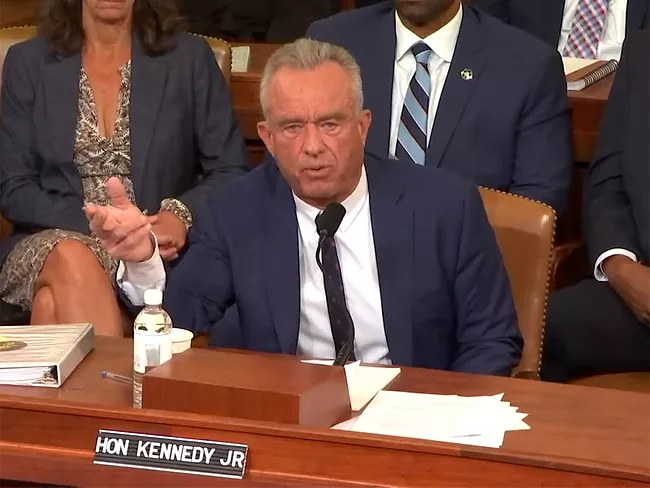
U.S. Health and Human Services (HHS) Secretary Robert Kennedy made his first stop April 16 on a congressional tour in support of President Donald Trump’s proposed fiscal 2027 budget, which would reduce discretional spending for HHS and its agencies by about 12%.
In a move that could give patients quick access to drugs their doctors prescribe, the U.S. CMS is proposing a rule giving insurers no more than 24 hours to respond to urgent prior authorization requests and 72 hours for standard requests. The rule also would require full disclosure of claims denials and appeals outcomes.

 RSS
RSS