D3 Bio Inc. secured $108 million in a series B financing round Dec. 9 to support its planned phase III program of lead oral KRAS G12C inhibitor, elisrasib (D3S-001).
As the systematic dismantling of the U.S. vaccine schedule escalates, the demands to hold Health and Human Services Secretary Robert Kennedy accountable are growing. Claiming that Kennedy has turned his back on science and is endangering public health, Rep. Haley Stevens, D-Mich., formally introduced articles of impeachment against him Dec. 10 for “high crimes and misdemeanors.” Under the Constitution, federal officials can only be impeached for treason, bribery and “other high crimes and misdemeanors.”
Management is beaming with delight at Heartbeam Inc. as the company's appeal strategy paid off with U.S. FDA clearance for its synthetic 12-lead electrocardiogram software for the assessment of arrhythmias. In November, the Santa Clara, Calif.-based company received a Not Substantially Equivalent determination from the agency on its 510(k) application, which could have substantially delayed commercialization. Following a plan disclosed Nov. 28, the company resolved the agency's issues through an appeal process and active engagement and obtained clearance much more quickly than expected.
Ideaya Biosciences Inc. has submitted an IND application to the FDA for IDE-574, a KAT6/7 dual inhibitor with potential to treat hormone receptor-positive breast cancer and lung adenocarcinoma. A phase I trial of IDE-574 monotherapy is expected to begin in the first quarter of next year.
While the U.S. Congress has yet to address the artificial line it created between biosimilars and interchangeables when it passed the Biologics Price Competition and Innovation Act in 2010, the FDA is erasing that distinction for all practical purposes.
The U.S. FDA’s remote regulatory assessment (RRA) program, the subject of a guidance the agency finalized in June 2025, is proving to be one of the trickier bits of navigation for makers of devices, drugs and biologics.
While several targeted therapies are approved for acute myeloid leukemia, a 2023 U.K. study found that median survival following diagnosis was only about seven months, highlighting the need not only for new therapies, but for a faster regulatory strategy. At the American Society of Hematology’s 67th annual meeting in Orlando Dec. 6, researcher Jesse Tettero presented data supporting the use of a measurable residual disease (MRD) surrogate endpoint in acute myeloid leukemia (AML) research.
The U.S. FDA’s clearance of Medtronic plc’s Hugo robotic-assisted surgery (RAS) system is certainly a boon for the company which is betting on the unit to be a key growth driver. While the soft tissue robotics market is dominated by Intuitive Surgical Inc.’s da Vinci system, the space is growing, and Medtronic has the scale, resources and market presence to make headway but there are also a plethora of smaller, versatile and cost-effective systems looking for a piece of the pie.
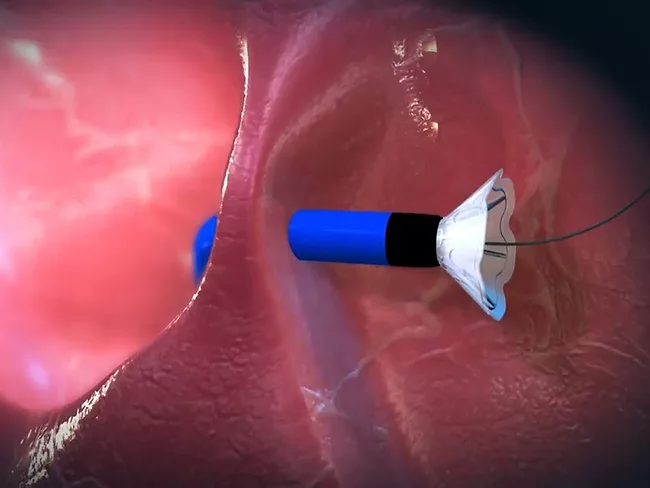
A U.S. FDA advisory panel voted unanimously against approving Johnson & Johnson’s V-Wave Ventura shunt for heart failure patients not helped by medications. The circulatory panel voted emphatically 15-0 against use of the shunt for heart failure patients not helped by medications based on effectiveness and its benefit-risk profile. On the question of safety, the panelists did vote 9-6 in favor of the device.
The U.S. FDA’s remote regulatory assessment (RRA) program, the subject of a guidance the agency finalized in June 2025, is proving to be one of the trickier bits of navigation for makers of devices, drugs and biologics. RRAs were on tap at the 2025 enforcement conference held by the Food and Drug Law Institute, but the session seemed to suggest that industry may not be fully prepared for how the agency will conduct these reviews, but also what it will do with the results.
 RSS
RSS




.webp?height=488&t=1670008838&width=650 "Acute myeloid leukemia")