Psoriasis is an inflammatory skin disease in which lipid metabolism is often dysregulated. ATP-citrate synthase (ACLY) is known to play a key role in lipid metabolism, but its involvement in psoriasis is not well understood.
Kinesin-like protein KIFC1 plays a role in the clustering of centrosomes in cancer cells and is being investigated in some types of cancer, concretely in melanoma.
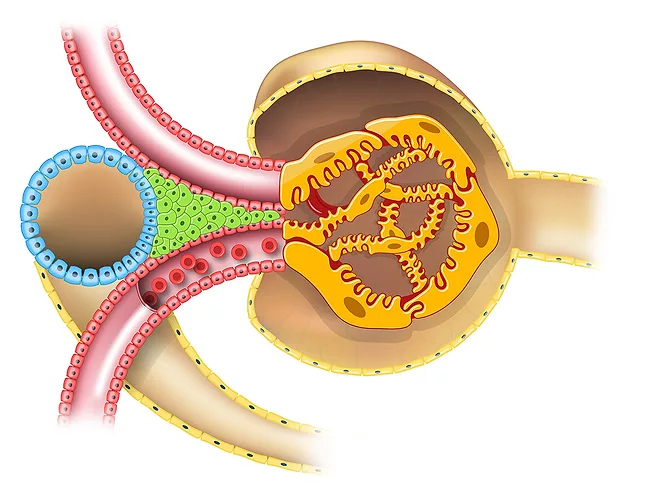
Podocytes are a terminally differentiated cell type located in the glomerulus. Podocyte damage and the subsequent dysregulation of podocyte proteins have been implicated in various kidney disorders. Since gene delivery to podocytes using adeno associated vectors (AAVs) has been challenging due to various technological and physiological hurdles, investigators at Purespring Therapeutics Ltd. developed an AAV gene therapy platform that allowed for effective, specific and safe delivery of transgenes to podocytes.
Interstitial lung fibrotic disease (ILD) is characterized by inflammation and fibrosis of lung tissue and is associated with poor prognosis. Gat Therapeutics SL has developed GTX-011, an orally available small molecule for treating fibrotic diseases.
CTNNB1 syndrome is a rare neurodevelopmental disorder that is caused by mutations in the gene encoding β-catenin, CTNNB1, which plays a critical role in neuronal development, synapse formation and brain maturation.
About 50% of patients with small intestine neuroendocrine tumors (SI-NETs) have their prognosis negatively impacted by the development of mesenteric fibrosis, but the mechanisms behind these are poorly understood. In work at Sun Yat-sen University, single-cell RNA sequencing was performed on five primary tumor specimens and their corresponding adjacent nontumoral tissues.
Researchers from Iomx Therapeutics AG presented the discovery and preclinical evaluation of IOMX-0675, a novel LILRB1 and LILRB2 cross-specific antibody being developed for the treatment of solid tumors.
α1-Antitrypsin deficiency is a hereditary disorder that affects the liver in children and adults, as well as the lungs in adults. The disease is mostly caused by the Z allele mutation in the SERPINA1 gene, where a glutamic acid amino acid is substituted by lysine (E342K) leading to protein misfolding and aggregation.
Many patients with peripheral nerve diseases do not have a sufficient regenerative response because of genetic inheritance, infections or chronic disease, leading them to lifelong pain and disability.
Researchers from Poseida Therapeutics Inc. presented preclinical data for P-FVIII-101, a novel nonviral gene therapy being developed for the treatment of hemophilia A.
 RSS
RSS