Total med-tech financing through the first half (H1) of 2026 reached $12.66 billion, down from 2025’s $17.56 billion but in line with 2024’s $13.94 billion over the same period.
Biopharma financing activity through the first two quarters of 2026 totaled $60.14 billion, the strongest first-half (H1) showing since 2024’s $70.32 billion and well above 2025’s $29.53 billion over the same period. The second quarter (Q2) of 2026 was particularly strong at $34.69 billion, the highest single quarter since Q1 2024’s $47.25 billion. Q1 came in at $25.45 billion, more than double 2025’s Q1 figure of $13.12 billion.
U.K. biotech has recorded the strongest quarter for venture capital raised in five years, with companies attracting £2.05 billion (US$3.36 billion) in the second quarter (Q2) of 2026. While that figure is dominated by the £1.56 billion series B round raised by Google Deepmind’s AI drug discovery spin-off Isomorphic Labs Ltd, the remaining £498 million is a significant increase to the £279 million raised in Q2 of 2025.
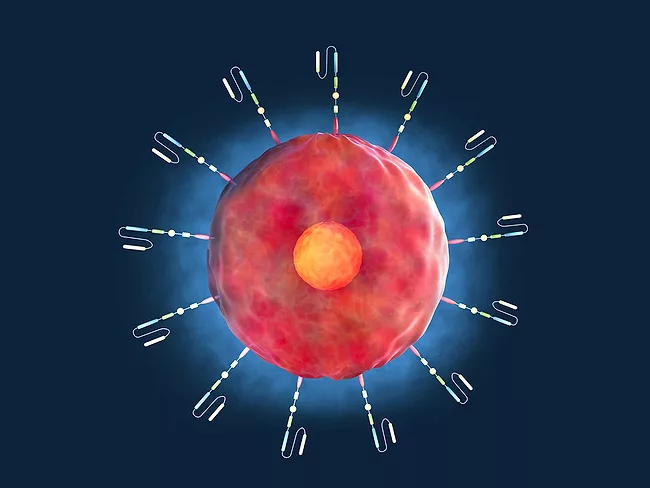
The field of cell and gene therapy is moving toward a new phase of scalability and clinical durability, with in vivo chimeric antigen receptor (CAR) T-cell therapeutics emerging as the dark horse in what speakers at BIO Asia-Taiwan 2026 described as CAR T’s second revolution.
Biopharma deal value through the first half (H1) of 2026 reached $170.11 billion, surpassing every prior year in BioWorld’s records, including 2025’s $139.35 billion, the previous high-water mark. June was the second-strongest month of H1 at $34.59 billion, trailing only May’s $41.95 billion.
 RSS
RSS