Regulatory snapshots for biopharma and med tech, including global submissions and approvals, and other regulatory decisions and designations: Aspen, Axsome, Celcuity, Meridian, Orasis, Roche.
Biopharma and med-tech happenings, including deals and partnerships, and other news in brief: Argenx, Bruker, Caredx, Chai, Clearside, Glucotrack, Leica, Lōkahi, Moderna, Noscendo, Pfizer, Sanofi, Senti, Statlab.
Clinical updates for biopharma and med tech, including data readouts and publications: Bpgbio, Fractyl, Kairos, Kelun-Biotech, Merck, Rani, Spinogenix, Veradermics.
Biopharma and med-tech companies raising money in public or private financings, including: Advancell, Attovia, Braveheart, Cardiff, Crescent, Kestra, Neko Health, Q32, Senhwa, Think Surgical, Tytocare.
New hires and promotions in the biopharma and med-tech industries, including: Aqtual, Attovia, Bambusa, Biocryst, Biogen, Corrixr, Decoy, Envue, New Phase, Profound, Prolynx, Rectify, Sandoz, Simris, Slate, Spur.
Abbott Laboratories raised its full-year 2026 adjusted diluted adjusted earnings per share guidance to $5.45 to $5.60, from previous range of $5.38 to $5.58, after a strong performance in the second quarter. Growth was driven by its medical devices business and cancer diagnostic unit.
Advancell Co. Ltd. has raised an oversubscribed $315 million series D round to accelerate its push to become a fully integrated global radiopharma developer, funding late-stage clinical development alongside isotope supply and manufacturing infrastructure.
Rebates on sales of patented drugs in Germany are to increase from 7% to 15.5%, following passage of an act to reduce healthcare spending across the board. There also will be a 9% rebate on patented vaccines, whilst at the same time prices will be frozen until 2030 and price-volume controls will be introduced to restrict the amount spent overall.
Signs of recovery are emerging in the biotechnology investment sector, although investors across Asia say that capital is flowing selectively to companies that can demonstrate clinical differentiation, strong management teams and a clear path to commercialization.
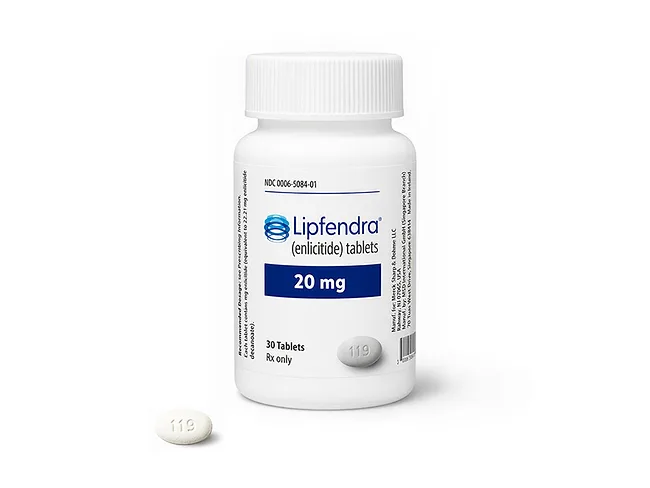
Branded Lipfendra, Merck & Co. Inc.’s oral PCSK9 inhibitor enlicitide, part of the FDA Commissioner’s National Priority Voucher pilot program, won U.S. approval to reduce low-density lipoprotein cholesterol (LDL-C) in adults with hypercholesterolemia, including heterozygous familial hypercholesterolemia.

 RSS
RSS