Intravascular ultrasound (IVUS) is an established method for gaining an appreciation of the sources of closure of the coronary arteries, but its use in the peripheral vasculature is not quite as well established. Nonetheless a new paper makes the case that IVUS may be appropriate for widespread use in connection with diseases of the peripheral vasculature, a position that could lead to a considerable expansion of sales of IVUS systems.
The U.K. National Institute for Health and Care Excellence (NICE) issued a pair of health technology assessments related to regurgitation of the tricuspid valve, one each for valve leaflet repair and for valve annuloplasty.
When medical device manufacturers think of U.S. federal government enforcement, the Sarbanes-Oxley Act (SOX) of 2002 might not be the first element of the statute to come to mind. However, the Securities and Exchange Commission (SEC) used SOX to snare Suralign Holdings Inc. for pushing orders to customers ahead of schedule to draw the related revenue forward, an allegation that led to restitutions and penalties amounting to nearly $3 million.
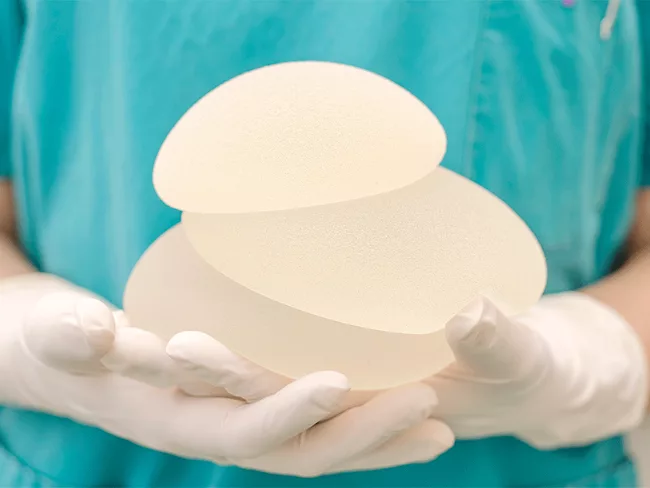
The U.S. FDA has updated its data on the number of fatalities across globe associated with breast implant-associated anaplastic large cell lymphoma (BIA-ALCL), which has now reach 59 fatalities. That number is up from 33 reported in July 2019 but is also a number the agency continues to assert may be a significant undercount.
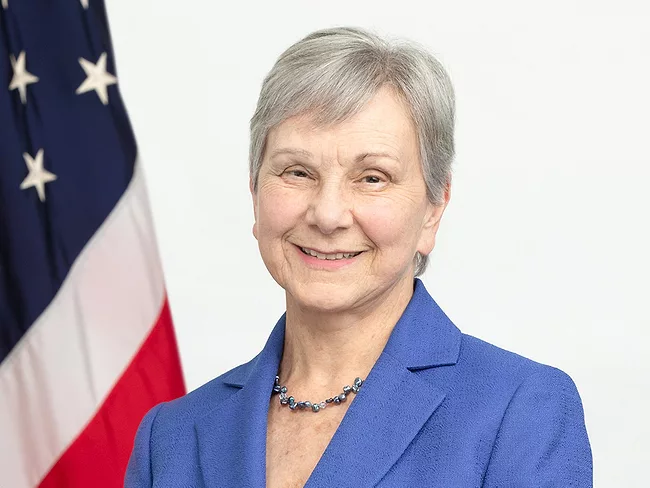
The U.S. Senate and House of Representatives have not yet come to terms on FDA user fee legislation, a quinquennial source of melodrama that leaves the agency in an awkward position with current employees. However, FDA principal deputy commissioner Janet Woodcock said recently that prospective employees are also watching how Congress handles its business, adding that some of these pending hires may take jobs elsewhere rather than wait on Congress to send a user fee bill to the White House.
Makers of biotech therapies and in vitro diagnostics may be understandably weary of hearing about patent subject matter eligibility under Section 101 of the Patent Act, but Sen. Thom Tillis (R-N.C.) is prepared to take another swipe at the problem. Tillis announced Aug. 3 that the Patent Eligibility Restoration Act of 2022 is intended to reverse some of the deleterious effects of U.S. Supreme Court jurisprudence on Section 101 questions, a proposal that may be the last, best chance to address what many believe is a fundamentally broken judicial understanding of subject matter eligibility.
The controversies over the use of ethylene oxide (EtO) as a medical device sterilant were quelled by the COVID-19 pandemic, but the U.S. Environmental Protection Agency (EPA) has resurrected the issue.
The difficulty in resolving multiple rounds of patent litigation can foster a willingness on the part of both parties to settle their differences and go on their respective ways, which seems to be the end result of litigation between San Diego-based Illumina Inc., and subsidiaries of BGI Group of Shenzen, China. While Illumina is on the hook for a $325 million payout in this agreement, the company will receive a license to practice some of BGI’s affiliate’s patents, but the handshake also forecloses any further litigation over the disputed patents for three years.
The U.S. FDA’s breakthrough devices program has engendered a tremendous amount of interest on the part of industry, but an Aug. 2 report by the law practice of Epstein Becker & Green P.C., suggests that the value of the program may be overblown. The report states that only 44 of the more than 600 devices that have been granted access to the program have successfully emerged – a number that was updated Aug. 3 by the FDA to 54 – which is still a rate that suggests that the breakthrough devices program might not be as helpful as billed.
The U.S. Centers for Medicare & Medicaid Services (CMS) has wrapped up its rulemaking for the next Medicare inpatient prospective payment system, and several companies managed to score important rate-setting wins for their devices. Microtransponder Inc., of Dallas, won a new technology add-on payment (NTAP) for its Vivistim device for treatment of stroke, as did W.L. Gore & Associates Inc. for its TAG thoracic branch endoprosthesis (TBE), just two among several winner in the Medicare inpatient final rule for fiscal 2023.