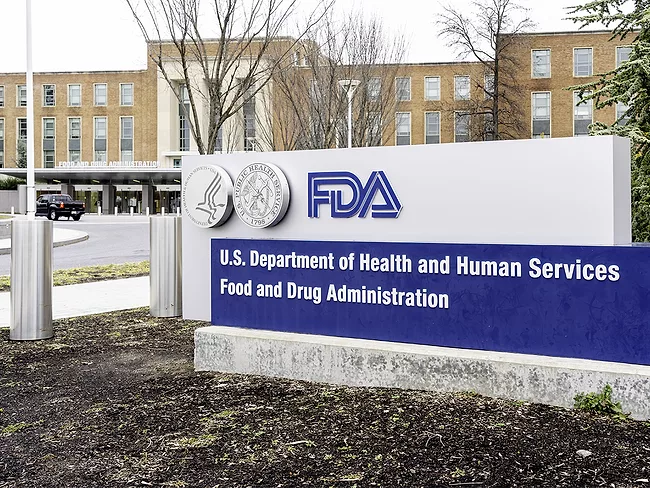
The FDA has published an updated guidance for the appeals process at the Center for Devices and Radiological Health, but the issuance of that guidance did not happen in a vacuum. Mark Duval, president of Duval & Associates in Minneapolis, told BioWorld that industry is filing more appeals of premarket decisions of late, an uptick he said is an artifact of the practice of FDA reviewers more commonly asking for additional data for these applications.
There are several devices on the market to repair the dreaded abdominal aortic aneurysm (AAA), but these carry some serious risks that have prompted multiple FDA advisories. The agency’s latest announcement recommends routine clinical follow-up for these patients for life, and the formation of a “real-world surveillance system” that may require the financial and technical assistance of industry and medical societies to develop.
The U.S. FDA’s device center has posted a report on premarket review performance metrics under the current device user fee schedule, and the latest data show an 83% rate of deficiency in first-cycle reviews of PMA original filings in the last three months of calendar year 2021. That rate is down somewhat from the 91% rate seen in 2016, but is up substantially from the 63% major deficiency rate seen in 2018, the low-water mark for this metric for more than a decade.
The FDA reported that the recall of the Arrow-Trerotola percutaneous thrombolytic device is a class I recall due to the risk of tip damage during use. This hazard could result in detachment of the tip from the device basket, which could damage or block vessels, a potentially lethal hazard for the patient.
The U.S. Federal Trade Commission has signed off on an amendment to the divestiture plan for Boston Scientific Corp. (BSX), of Marlborough, Mass., related to the acquisition of British Technology Group plc (BTG).
The European Union’s (EU) Medical Device Coordination Group (MDCG) posted a guidance addressing verification of manufactured, high-risk in vitro diagnostics (IVDs), which indicates that manufacturers should submit samples to a reference lab for batch testing. However, the requirement for batch testing may not apply if no European reference lab has been designated for a test type, suggesting that some high-risk tests may go to market without adequate testing.
John-Michael Havrilla, formerly the director of investor relations at Pavmed, has agreed to pay $160,000 in civil penalties over allegations he used inside knowledge of an impending earnings report to help himself to $80,000 in ill-gained profits, a sure sign the SEC is not ignoring med-tech firms in its pursuit of insider trading charges.
Germany passed a law in 2019 that provides for a combined premarket review and coverage mechanism for lower-risk devices that provides a staged path for rate-setting with the help of real-world evidence (RWE). That model has caught the attention of other European Union member states, such as France, but may be useful in the U.S. as well, given the FDA’s policy moves for RWE and digital health over the past few years.
Tariffs applied to goods imported for China were imposed by the Trump administration as part of a larger effort to reset the U.S. trade deficit, but there were several exclusions for medical devices in the interest of maintaining access.
The U.S. FDA has at last published what is nominally a draft rule for harmonization of the Quality System Regulation (QSR) with an international standard, ISO 13485, but the draft rule is conspicuous for the absence of specifics.