Total med-tech financings reached $8.81 billion in the first quarter (Q1) 2026, a 6% decline from $9.33 billion in Q1 2025 but well above the post-downturn lows of recent years. The 2026 total exceeds $6.45 billion in Q1 2024 and $4.69 billion in Q1 2023, indicating continued recovery from the weaker funding environment that followed the 2021 peak. While still below the $16.59 billion recorded in Q1 2019 and the pandemic-era highs, the data suggest that financing activity has stabilized at a higher baseline, with 2026 maintaining momentum despite a slight year-over-year pullback.
Med-tech dealmaking totaled $1.72 billion through the first three quarters of 2025, signaling a potential rebound in the works from the subdued activity seen in 2024, when publicly reported full-year deal value reached $2.12 billion. Q3 was the strongest quarter so far this year, contributing $1.37 billion, nearly 80% of the year-to-date total, following slower starts of $149.1 million in Q1 and $192.2 million in Q2.
A new oral HER2-directed breast cancer therapy from Bayer AG, and its companion diagnostic from Thermo Fisher Scientific Inc., have been approved by the U.S. FDA. Hyrnuo (sevabertinib), a reversible tyrosine kinase inhibitor, was greenlit by the agency for adults with locally advanced or metastatic non-squamous advanced HER2-mutant non-small-cell lung cancer.
Med-tech M&A activity totaled $4.84 billion in September, down slightly from $7.29 billion in July but stronger than August’s $2.42 billion. Year-to-date disclosed deal value reached $37.21 billion, roughly on par with the $41.79 billion recorded during the same period in 2024. While still far below the highs of 2021 and 2022, when annual totals surpassed $100 billion, the 2025 data show that consolidation within the med-tech sector remains steady.
In a bid to boost its multiomics holdings, Illumina Inc. reported an agreement to buy proteomics technology company Somalogic Inc. from Standard Biotools Inc. for $350 million in cash, plus up to $75 million in near-term performance-based milestones and performance-based royalties.
GC Genome Corp. priced a Kosdaq offering of 4 million shares at ₩10,500 per share May 27, entailing a gross ₩42 billion (US$30.5 million) raise in early June. The Yongin, South Korea-based genomics subsidiary of GC Biopharma Corp. fixed its shares price to the top of its ₩9,000 to ₩15,000 price band May 27 after conducting demand forecasting on domestic and international institutional investors from May 19 to May 23.
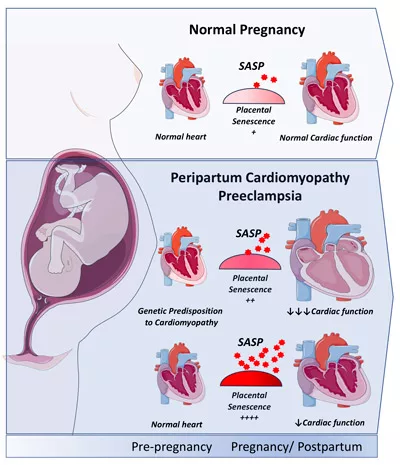
Mirvie Inc. continues the development of precision medicine for pregnancy-related conditions with its Encompass blood test to predict preeclampsia risk and individualized support to head off the life-threatening complication that affects one in 12 pregnancies. The test, which received U.S. FDA breakthrough device designation in 2022, is now available to order online with clinician review via telehealth.
The long-term status of the trade dispute with China remains unclear, but a 90-day reduction in stratospheric tariffs imposed by the U.S. and China on their respective products provides breathing room for the med-tech companies predicting the hardest hit from the original levels.
The Trump administration’s declaration of a new round of tariffs did not sit well with trade associations, but the impact of those tariffs may vary somewhat by company. Analysts said the lack of clarity regarding the impact of tariffs makes it difficult to predict the impact on the device and diagnostics industries, leaving investors and customers alike with a large overhang of uncertainty.
The trend of corporate pruning in med tech continues with Solventum Corp.’s decision to sell its purification and filtration business to Thermo Fisher Scientific Inc. for $4.1 billion. The announcement follows two other big company splits already in 2025: Baxter International Inc.’s separation of its kidney unit as Vantive, bought by Carlyle Group Inc. for $3.8 billion, and Stryker Corp.’s planned sale of its spinal implants business to Viscogliosi Brothers LLC.