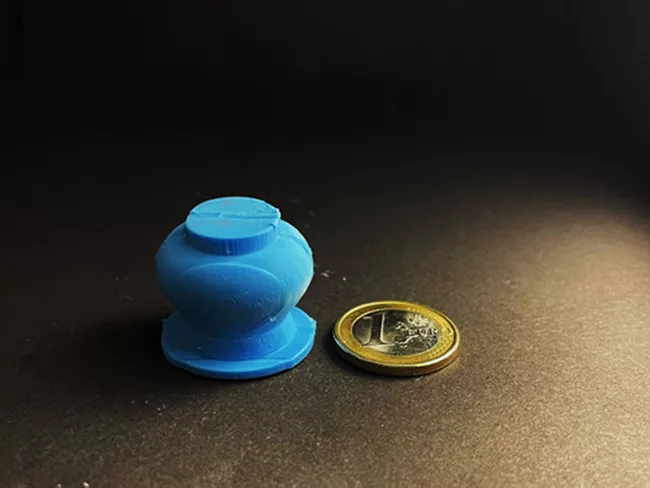
Researchers have developed a new blood collection device inspired by the behavior of a leech which attaches itself to a host, penetrates their skin with its teeth and swallows to create negative pressure drawing blood.
Omini SA hopes that the multiplexed blood testing platform it is developing will transform the lives of patients suffering from heart failure. With its multiplex, sensor-based testing strip that simultaneously measures four key biomarkers from a single drop of blood, the company’s technology should increase the chance of a patient’s survival and reduce pressure on health care systems, Joanne Kanaan, CEO and co-founder of Omini, told BioWorld.
The recent greenlight from European regulators to Tasso Inc. to market its Tasso+ device in the EU brings another solution to the market for blood collection Tasso has developed the Tasso+, a single-use blood lancing device that collects a microliter capillary blood from the upper arm. Tasso claims that it is the first device of its kind to get both CE mark and U.S. FDA approval.
Babson Diagnostics Inc. has line of sight for the commercial launch of its Betterway blood testing ecosystem, which is a less invasive way of taking blood and requires only one-tenth of the sample volume of venipuncture without sacrificing quality or accuracy. The company said that once the collection device developed in partnership with Becton Dickinson & Co. (BD) is cleared by the U.S. FDA, Betterway will be launched in Texas, where it already has established partnerships with retailers and where its commercial lab is up and running. In addition, Babson has fully validated a broad set of miniaturized assays that are ready for commercial processing in its CLIA-certified, CAP accredited laboratory.
News from Truvian Health Inc. that its benchtop blood testing platform can deliver results similar to those generated by central laboratory is promising for the diagnostic sector still coming to terms with fraudulent claims from companies such as Theranos Inc. and Arrayit Corp. that their various technologies were able to run an array of tests with just a few drops of blood.
The epic rise and fall of Elizabeth Holmes, founder of Theranos Inc., will preoccupy the world of business for decades to come, but this story has also left a large footprint in the world of clinical diagnostics. David Stein, CEO of Babson Diagnostics Inc., of Austin, Texas, told BioWorld that investors are a bit more wary than usual because of the Theranos saga, forcing test developers to be more rigorous in test development and more transparent with investors about a test.
Looking to allow customers to directly purchase its diagnostics system that runs a full panel of blood tests, Babson Diagnostics Inc. raised $31 million in new series B financing. The proceeds will be used to scale the Austin, Texas-based company to bring its finger-prick blood microsampling system to retail locations across the country.
Driving to a laboratory for blood testing may soon be a thing of the past. Babson Diagnostics Inc. just completed a pivotal study of its new system for collecting and analyzing blood from a finger prick at a pharmacy counter. The results indicate that the microsample system provides comparable results to phlebotomist-drawn venipuncture blood samples.
Making routine diagnostic blood tests less invasive, easier, cheaper and more accessible is a worthy goal. But achieving it has eluded many, including former unicorn startup Theranos that boasted it had achieved precisely that but then was later exposed as a fraud. Established med-tech player Becton, Dickinson and Co. (BD) and Babson Diagnostics Inc. have established a long-term strategic partnership to bring laboratory quality, small-volume blood collection into the retail pharmacy setting.