Johnson & Johnson subsumed five of its medical technology business under the Johnson & Johnson Medtech name. Ethicon, Depuy Synthes, Biosense Webster, Abiomed and Cerenovus no longer exist as independent entities, but J&J announced no changes in the product lineup.
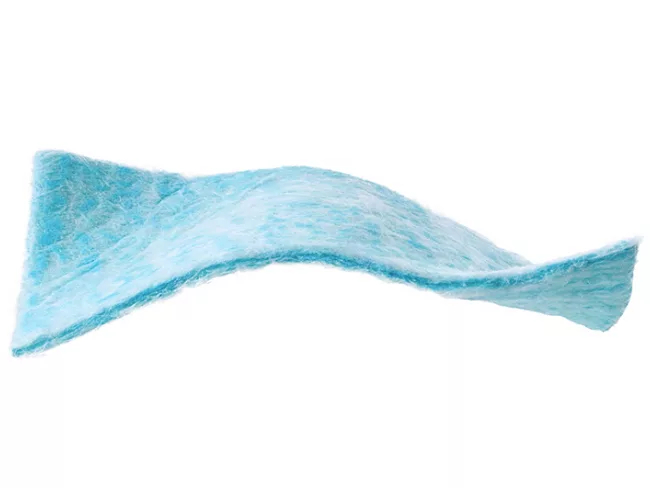
News comes from the U.K. Intellectual Property Office at the beginning of May 2024, where Ethicon, a Johnson & Johnson MedTech company, applied for five additional years patent protection for its Ethizia hemostatic sealing patch, whose embedded Pox polymer system dehydrates blood and accelerates the coagulation cascade to in occur in seconds, forming a tight yet flexible seal that maintains a barrier to bleeding.
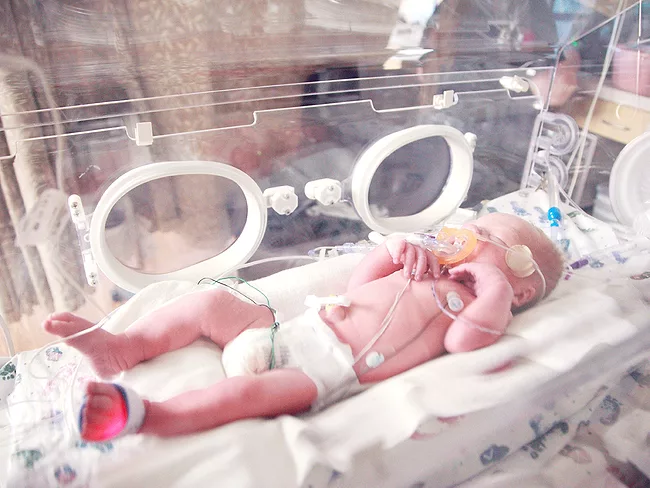
The U.S. FDA announced several new and updated recalls recently, including a new recall of incubators made by Wipro GE Health Pvt. Ltd., of Bangalore, India, which may be subject to an increased risk that the infant may fall out of the system.
The U.S. FDA reported July 11 a class I recall for patient return electrodes used during electrosurgical procedures that may burn the patient with sufficient severity to induce a third-degree burn. More than 21,000 of the electrodes, made by Raritan, N.J.-based Ethicon Inc.’s Megadyne division, are subject to the recall, although the agency said the manufacturer is still conducting a root cause analysis of the issue.
The U.S. Supreme Court has declined to grant cert for a petition filed by Johnson & Johnson on behalf of its Ethicon subsidiary to review a case in California that will cost the company more than $300 million. The outcome highlights the differential hazards of advertising and promotion in various U.S. states, with California state law allowing fines of up to $2,500 for each violation of state law, an amount that can quickly tally into the hundreds of millions.
The U.S. FDA has been scrutinizing surgical meshes for safety considerations for longer than a decade, but litigation continues to dot the legal landscape. An appeals court in the state of California decreed recently that Johnson & Johnson of Franklin Lakes, N.J. must pay more than $300 million over allegations that its Ethicon subsidiary had downplayed to patients the risks associated with its pelvic meshes, but J&J said its next step is to appeal the outcome in the state’s highest court.
Ethicon Endosurgery Inc. has had its hands full protecting a patent for robotic surgical systems, but the U.S. Court of Appeals for the Federal recently delivered some good news. The Federal Circuit affirmed the results of an inter partes review (IPR) of three claims for an endocutter patent, leaving Ethicon with another win in its efforts to sustain a critical patent for the robotic surgical space, and major player Intuitive Surgical Inc. coming out on the short end of the argument.
The FDA’s regulation of medical technology may be assumed to have a number of unintended consequences, and one of those seems to be the lawsuit between Johnson & Johnson (J&J) and Auris Health Inc. Due to a 2018 FDA policy change regarding 510(k) devices, a robotic surgery system acquired by a J&J subsidiary from Auris was forced into the lengthier de novo premarket channel. This change ultimately helped derail the development effort for the Auris Iplatform surgical system and thus played a role in the $2.35 billion lawsuit alleging that J&J had engaged in fraud in its deal with Auris over the acquisition.
The U.S. FDA said the results of a Section 522 postmarket surveillance study of transvaginal mesh devices by Boston Scientific Corp. suggested similar effectiveness and safety outcomes at 36 months compared to native tissue repair. However, the agency said patients with mesh repair for pelvic organ prolapse (POP) are exposed to additional risks, such as mesh exposure and erosion, and thus the agency is disinclined to allow these devices back onto the market.
The FDA’s premarket review mechanisms for class II medical devices may strike some as little more than so much regulatory esoterica, and several courts have ruled that information about the 510(k) process is inadmissible during jury trials due to the possibility of sowing confusion among jurors. An appellate court in New Jersey has ruled that such an exclusion of evidence is prejudicial in a case involving surgical mesh manufactured by two device companies, however, opening a larger debate about the propriety of such exclusions in product liability litigation for medical devices.