In what represents the first filing to have emerged in the name of Cellect Laboratories Inc., one of the start-up’s co-founders, Claire Theresa Murphy, describes their development of a non-invasive screening method that could one day replace the Pap test.
Researchers from the University of California, Davis (UC-Davis) continue to assemble intellectual property in support of their development of methods and techniques which improve the accuracy of wearable sensor technologies.
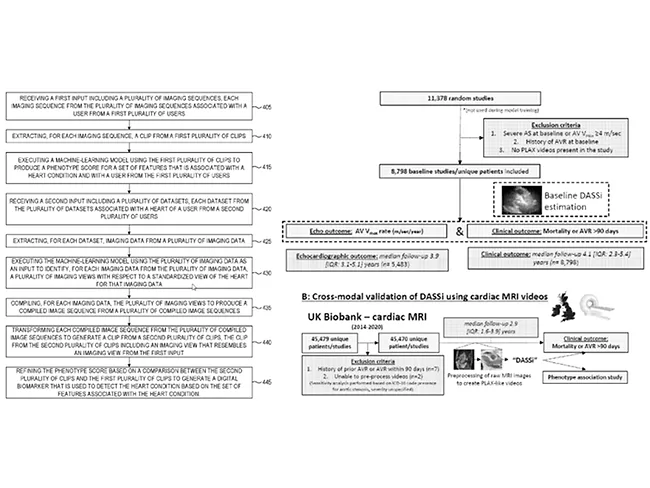
Researchers from the Yale University filed for protection of a multi-modal approach to predict the progression risk of a heart condition using artificial intelligence algorithms applied to cardiovascular videos.
The first filing in the name of Grand Rapids, Mich.-headquartered Corium Innovations Inc. confirms the company formerly known as Corium Pharma Solutions Inc. is developing treatments for multiple sclerosis and ulcerative colitis that employ its proprietary Corplex transdermal patch technology.
Researchers from IMEC, the Netherlands’ OnePlanet Research Center in Wageningen, filed for protection of an inexpensive, highly miniaturized ingestible device that may be used for remotely activatable sampling, gut health monitoring and drug delivery.
Researchers from the University at Buffalo, the State University of New York (SUNY), filed for protection of their development of a new imaging technology that uses radar and AI to see through dressings to monitor wounds and other skin conditions.
In what represents the company’s first filing, the co-founders of Pharmalytix Inc., Sierra Houang and Lee Grady, describe their creation of a simple, quick, low-cost at home lateral flow test for determining insulin quality.
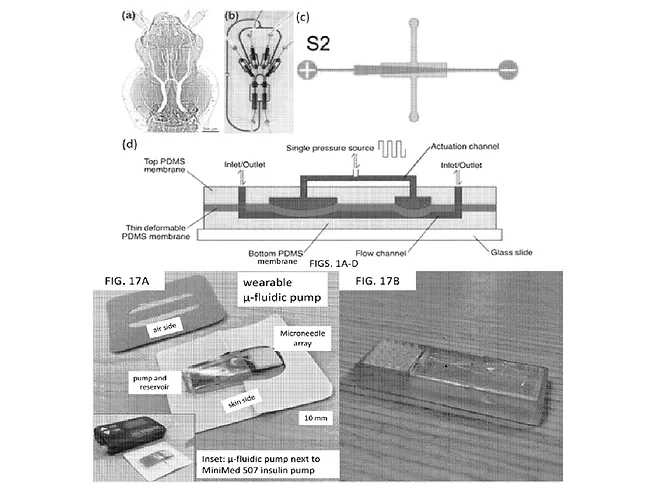
Researchers from Virginia Polytechnic Institute and State University filed for protection of their development of a slim, painless, and affordable microfluidic infusion pump device for the continuous transdermal delivery of drugs.
In what represents their first patenting, researchers from New York’s Stony Brook University filed for protection for development of a system and method that uses computer vision to analyze microscale facial movements in order to objectively help diagnose, monitor, and treat disorders of consciousness.
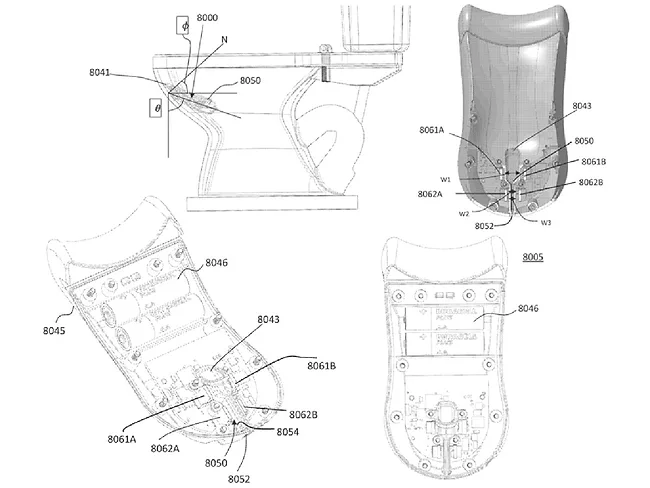
In what represents just the company’s third PCT filing, Houston-based Starling Medical Inc.’s co-founders, Hannah McKenney and William Hendricks, seek to gain further protection for their at-home urine diagnostic patient-monitoring platform that eliminates the traditional use of catching containers and dipsticks.