Artificial intelligence (AI) and machine learning (ML) are all the rage in 2022 when it comes to medical radiology, but regulators across the globe are struggling to devise regulatory frameworks that ensure safety and efficacy without strangling innovation. There are a number of other stakeholders in this sphere of med tech, however, each with their own considerations. In this six-part series, BioWorld will examine these considerations in an effort to characterize the working environment for AI and ML as it exists now, and what that environment might look like in the years ahead.
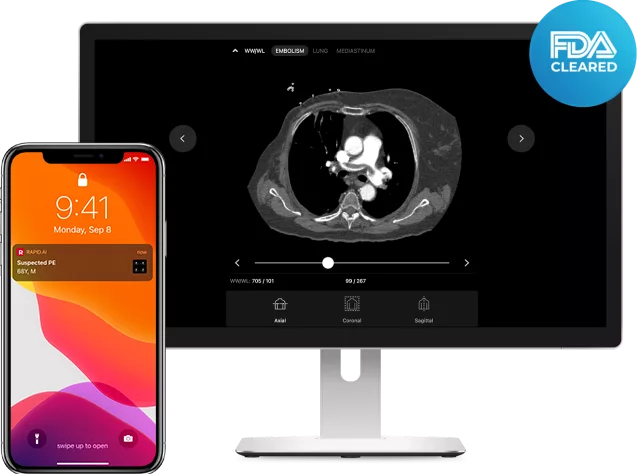
The transformation of cardiology continues with two U.S. FDA actions to promote the use of artificial intelligence (AI): a 510(k) clearance for Rapidai Inc.’s pulmonary embolism (PE) triage and notification product and breakthrough device designation for Anumana Inc.’s pulmonary hypertension (PH) early detection algorithm.
RapidAI, which focuses on imaging for stroke, has launched the Rapid Web App to help stroke teams stay updated on imaging results and communicate securely. Using the app, team members can receive real-time browser notifications of new cases, preview Rapid results and source files and engage in workflow communications via a desktop or laptop computer.
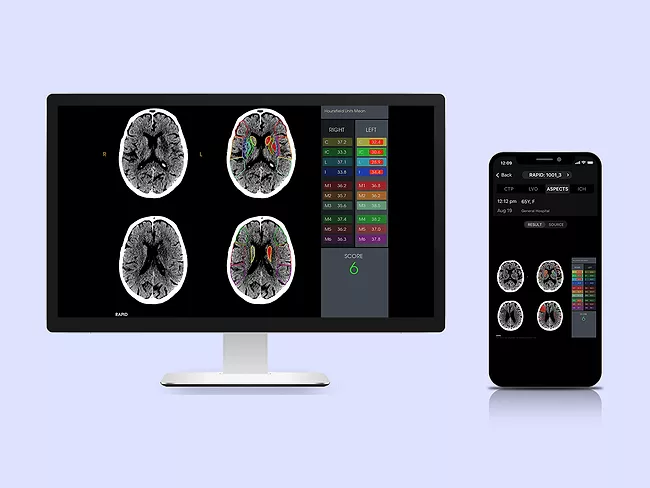
RapidAI, which focuses on imaging for stroke, has received the U.S. FDA’s nod for Rapid ASPECTS. According to the company, it is the first neuroimaging analysis device to gain clearance in the computer-assisted diagnostic software category.