Like waves crashing on the beach, med-tech IPOs keep on coming. Heartflow Inc. set terms for its IPO on Aug. 1, offering 12.5 million shares at a price range of $15 to $17 per share. At the top of the range, the company could raise a sunny $212.5 million. It plans to list on the Nasdaq with the symbol “HTFL.”
Bioprosthetic heart maker Carmat SA shares collapsed on June 23, reaching €0.28 on the Paris Stock Exchange after the company announced it would run out of cash by the end of the month without immediate financial support.
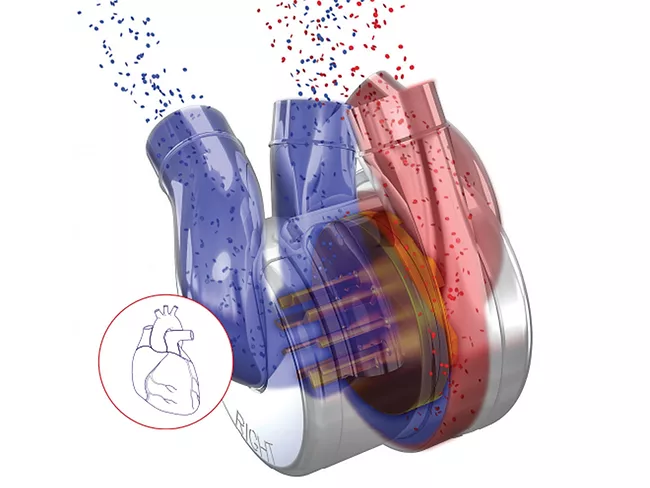
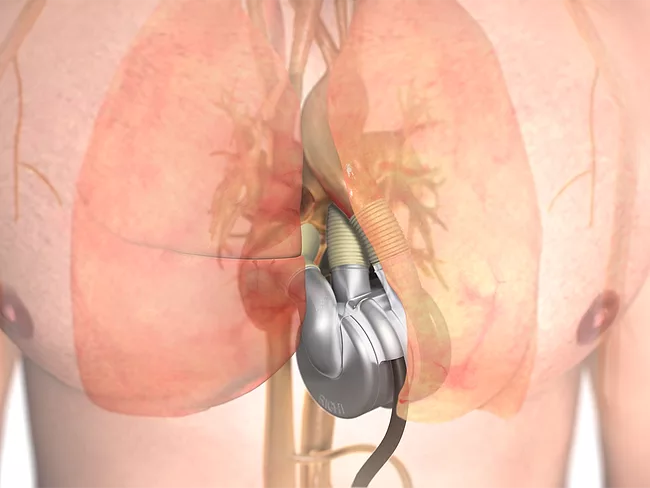
The U.S. FDA’s decision to grant breakthrough device designation for Bivacor Inc.’s titanium total artificial heart (TAH) sent real hearts aflutter at the Huntington, Calif.-based company’s headquarters. While the designation supports use of the TAH as a bridge to transplant for adults with biventricular or univentricular heart failure for whom current options are insufficient or unsuitable, Bivacor hopes its device will eventually serve as a long-term heart replacement.
An Australian man in his 40s with severe heart failure was implanted with a Bivacor Inc. total artificial heart (TAH) and has been discharged from the hospital. He remained at home with the artificial heart for 100 days until he received a transplant earlier this week.
Carmat SA recently reported a software update for its bioprosthetic total artificial heart Aeson device that will significantly improve its safety profile. In the past, the company had to suspend implantations of its device following issues around quality. With the enhancements, the Aeson software will be able to detect signals of malfunctions in real time and adapt the control of the prosthesis so that its performance is not affected.
“The FDA approval to begin the Bivacor Total Artificial Heart EFS is a critical milestone for Bivacor and is another validation of the remarkable work and accomplishments of the entire Bivacor team. This device will provide a unique approach to help patients currently with limited clinical options,” said William Cohn, heart surgeon at the Texas Heart Institute and Bivacor chief medical officer.
PERTH, Australia – The Australian government’s Medical Research Future Fund (MRFF) has funded a new program called the Artificial Heart Frontiers Program that aims to develop and commercialize a world-first durable total artificial heart. The Medical Research Future Fund has provided A$1 million (US$739,000) in funding that will establish the program over the next five years.