Countries in the Asia Pacific (APAC) region have an opportunity, or a time-limited “gap,” to become leaders on the global biotechnology stage, panelists at the Bio Asia 2025 conference said in Singapore Sept. 9.
In 2023, Japan has faced mounting criticism from the pharma industry for its annual price reductions. Ahead of the G7 summit hosted in Japan in May 2023, a delegation of 24 CEOs from the Biopharmaceutical CEO Roundtable met with Japanese Prime Minister Fumio Kishida to discuss global priorities and to flag concerns over drug pricing policies in Japan. Meanwhile, in 2023, China agreed to add 126 drugs to its National Reimbursement Drug List, in a negotiation process that has become more transparent and predictable than ever before. South Korea faces drug pricing reform, while Australia’s government has started an overhaul of its health technology assessment process.
If the COVID-19 pandemic shocked countries to build self-reliance in biomedical ecosystems, the re-opening of borders in 2023 kickstarted international collaborations to grow major biohubs in Asia. Countries in the Asia Pacific region – including Singapore, China, Japan, Korea and Australia – increasingly drew overseas investors and collaborators, helping each country grow national biotech capabilities and expertise.
If the COVID-19 pandemic shocked countries to build self-reliance in biomedical ecosystems, the re-opening of borders in 2023 kickstarted international collaborations to grow major biohubs in Asia. Countries in the Asia Pacific region – including Singapore, China, Japan, Korea and Australia – increasingly drew overseas investors and collaborators, helping each country grow national biotech capabilities and expertise.
As it develops a new metastasis-on-a-chip device based on microfluidic chip technology that provides a platform to capture and study highly metastatic cancer cells, Mettactics Ltd. is in the process of raising financing to develop its product to empower precision medicine. Founded in 2019, Hong Kong-based Mettactics developed a microfluidic device that can capture metastatic cells and carry out clinical tests to predict the drug response of patients based on the cells’ genetic signature.
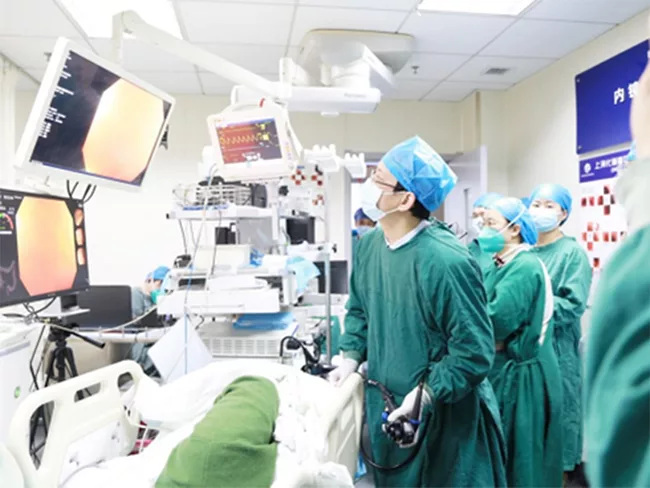
Wuhan Endoangel Medical Technology Co. Ltd.’s artificial intelligence (AI)-assisted real-time quality control and auxiliary diagnosis system for lower gastrointestinal endoscopy has been approved by China’s NMPA.
Grand Pharmaceutical Group Ltd. obtained China’s NMPA approval for an intravascular dual-mode imaging system for coronary artery imaging, tapping into a potentially huge but very undeveloped market for imaging in percutaneous coronary interventions (PCI).
The venture capital market in South Korea is frozen shut, said presenters during the recent BIO Korea 2023 conference in Seoul, but Korea’s Medical Device Development Fund will help support domestic R&D efforts to the tune of ₩987 billion (US$738 million) over five years.
Acotec Scientific Holdings Ltd. received Chinese marketing approval for its microcatheter Vericor-14 to assist in percutaneous coronary interventions and percutaneous peripheral interventions, taking a step forward in a competitive market that is poised to grow eightfold by the end of the decade.
Meio Medical Inc.’s Titian, a surgical robot for navigation in cardiac electrophysiology, has been included in a Green Pathway for approval of medical devices in China, meaning it could get to market faster. Inclusion in the Green Pathway gives the medical device priority for reviewing and shortens the average registration time. Currently, Meio Medical is running a trial of Titian in multiple hospitals in China.