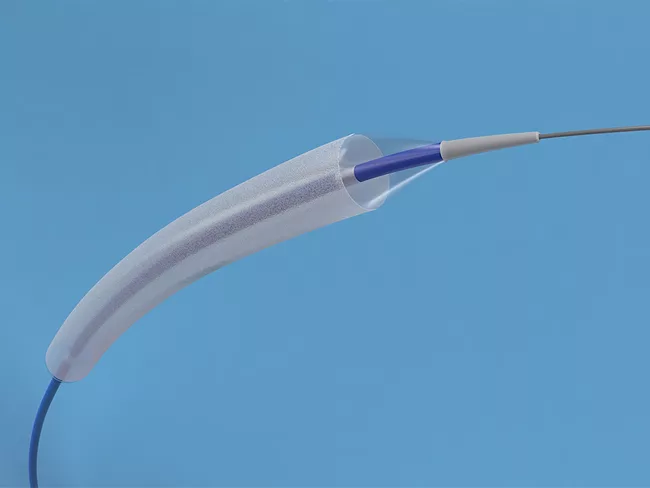
On March 1, Boston Scientific Corp.’s Agent drug-coated balloon (DCB) became the first DCB to gain U.S. FDA approval for treatment of in-stent restenosis in patients with coronary artery disease. With more than 100,000 patients already treated in Europe, Latin America and Japan, it’s no secret Agent provides significant benefit compared to balloon angioplasty or drug-eluting stents (DES) for the approximately 10% of patients with coronary stents who experience subsequent narrowing of the treated vessel.
Cordis Corp. covered its bets a bit as it closed the acquisition of M.A. Med Alliance SA (Medalliance) announced almost a year ago. While the total payment for the company could total $1.135 billion, it could take six years for the owners of privately held Medalliance to see most of the funds.
Five long years after the publication of the now-notorious Katsanos paper, the U.S. FDA has issued a final determination about whether devices indicated for treatment of peripheral artery disease carry the threat of excess mortality when using paclitaxel as an antiproliferative.
Elixir Medical Corp. reported that the Bioadaptor randomized controlled trial which compared its Dynamx coronary drug-eluting bioadaptor system to Dublin-based Medtronic plc’s Resolute Onyx drug-eluting stent (DES) in de novo native coronary arteries, met its primary endpoint of target lesion failure (TLF) non-inferiority at 12 months. The results were presented at a late-breaking clinical session during the EuroPCR 2023 conference in Paris.
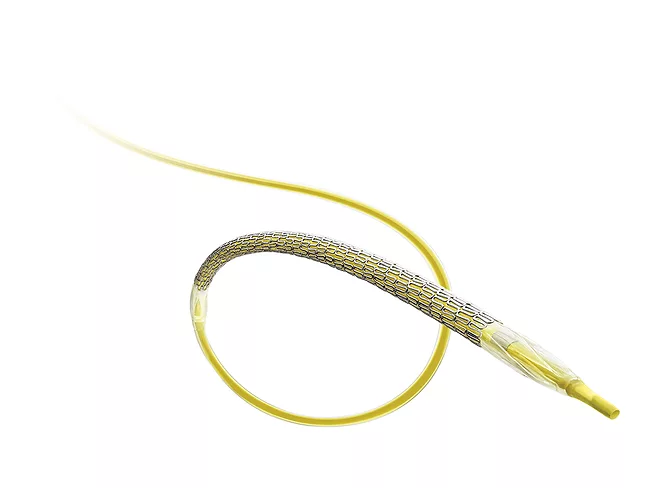
Medtronic plc received FDA premarket approval for its Onyx Frontier drug-eluting stent, an update to the company’s Resolute Onyx stent. The Frontier is designed for treatment of patients with coronary artery disease (CAD), a leading cause of death in the U.S. Medtronic expects the stent to receive CE mark shortly.