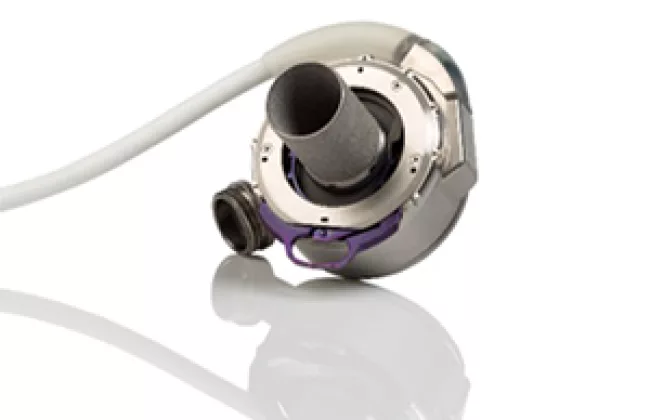
The U.S. FDA posted notice of a recall of the system monitor for the Heartmate left ventricular assist device by Abbott Laboratories, an action necessitated by reports of a series of malfunctions that may lead to inadvertent operator error.
Researchers from the University of South Florida developed a novel ventricular assist device that is placed directly inside a failing ventricular cavity to help it pump blood correctly again. This device consists of a self-expanding stent that contains a sac and inlet/outlet ports that allow compression fluids to generate contractile forces that pump the blood out.
The long-term use of ventricular assist devices is becoming a problem for at least some of these devices, as demonstrated by the recall of the Heartmate II and Heartmate 3 devices by Abbott Laboratories’ Abbott Vascular division due to obstruction of the outflow graft used to attach the device to the human heart.
The markets for ventricular assist devices (VADs) and intraortic balloon pumps (IABPs) are hardly littered with competition, but the few companies that work in these two device categories have faced seemingly routine recalls over the past couple of years. The U.S. FDA recently reported yet another round of class I recalls for a single model in both Abiomed Inc.’s Impella line of VADs and Datascope Corp.’s Cardiosave line of IABPs, but the agency’s apparent unwillingness to force either manufacturer to withdraw any of these recalled products seems to suggest that product shortages would quickly follow any such move on the FDA’s part.
Abiomed Inc., has worked the ventricular assist device (VAD) space for a number of years with its Impella series of VADs, and a study coming out of Japan seems to affirm investors’ confidence in these devices. This registry study demonstrated that the combination of Impella devices and extracorporeal membrane oxygenation (ECMO) provides a 30-day survival rate of more than three in four patients with cardiogenic shock, an outcome that is said to support the notion that the native heart tissue can recover from myocarditis, an especially salient consideration for those who contracted the SARS-CoV-2 virus.
Integra Lifesciences Holdings Corp., of Plainsboro, N.J., said in its latest 8K filing that it has decided to voluntarily remove all the company’s Cerelink systems – which are indicated for intracranial pressure monitoring – due to customer reports that these monitors were returning inaccurate pressure readings.
The U.S. FDA has posted notice of an advisory issued by Dublin-based Medtronic plc, regarding the Heartware ventricular assist device due to a pump weld defect, which the agency has identified as a class I recall. The recall affects devices that have been in use since 2006 and is associated with the entry of moisture into the pump center post, which can de-magnetize the magnets and thus trigger malrotation and consequently damage to the welds.