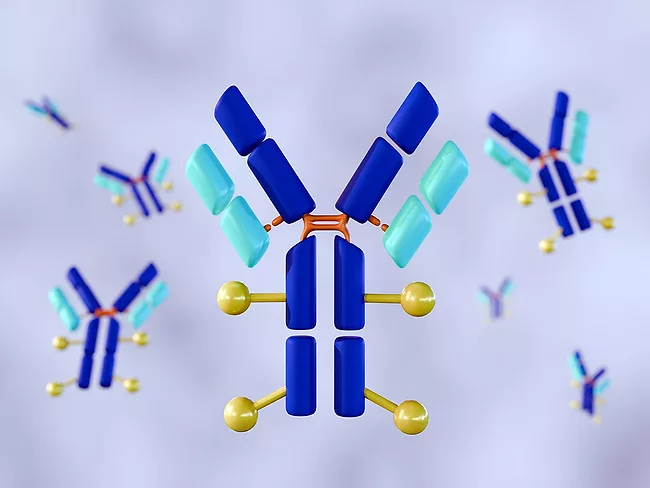
Antibody-drug conjugates (ADCs) are a mature technology. The first ADC, Mylotarg, was initially approved in 2000, and there are now 14 approved agents in both leukemias and solid tumors. According to Clarivate’s Cortellis Drug Discovery & Intelligence, those drugs collectively accounted for $13.55 billion in sales in 2024 – a figure that Cortellis projects will rise to $16 billion in 2025.
The expression of tissue factor (TF) is limited in normal tissues to the perivascular compartment where it acts as the receptor for the serin protease factor VIIa. This signaling axis triggers the initiation of extrinsic coagulation protease cascade.
Adcendo ApS has inked a deal with Multitude Therapeutics Inc. and is licensing Multitude’s phase I-ready antibody-drug conjugate (ADC), ADCE-T02, which targets tissue factor. Under the deal, Copenhagen, Denmark-based Adcendo gains exclusive development and commercialization rights for the ADC globally, excluding greater China (mainland China, Hong Kong, Macao and Taiwan) where Multitude retains all rights.
Adcendo ApS has inked a deal with Multitude Therapeutics Inc. and is licensing Multitude’s phase I-ready antibody-drug conjugate (ADC), ADCE-T02, which targets tissue factor. Under the deal, Copenhagen, Denmark-based Adcendo gains exclusive development and commercialization rights for the ADC globally, excluding greater China (mainland China, Hong Kong, Macao and Taiwan) where Multitude retains all rights.
Adcendo ApS and Multitude Therapeutics Inc. have signed a licensing agreement for the development of a highly differentiated antibody-drug conjugate (ADC) targeting tissue factor, designated ADCE-T02.
In a first, the U.S. FDA accepted an artificial intelligence (AI)/machine learning-model into its Innovative Science and Technology Approaches for New Drugs (ISTAND) pilot program for drug development. The program will support use of Deliberate AI Inc.’s anxiety and depression assessment tool, called the AI-generated Clinical Outcome Assessment, as a qualified drug development tool.
In a first, the U.S. FDA accepted an artificial intelligence (AI)/machine learning-model into its Innovative Science and Technology Approaches for New Drugs (ISTAND) pilot program for drug development. The program will support use of Deliberate AI Inc.’s anxiety and depression assessment tool, called the AI-generated Clinical Outcome Assessment (AI-COA), as a qualified drug development tool.
Researchers from Multitude Therapeutics Inc. have reported the preclinical profile of AMT-253, a MUC18-targeting antibody-drug conjugate (ADC) under development for the treatment of melanoma. It comprises the anti-MUC18 humanized antibody pAb253-H linked to T1000 exatecan payload and showed superior antitumor efficacy than the traditional vc-MMAE-based ADC AMT-253-M.
Cadherin 6 (CDH6) is a transmembrane protein with high expression during embryonic kidney development, with very limited expression in adult tissues but overexpressed in several malignancies such as ovarian or renal cancer, and it is tied disease progression and poor prognosis. This pattern of expression makes it an attractive target for antibody-drug conjugate (ADC) development.