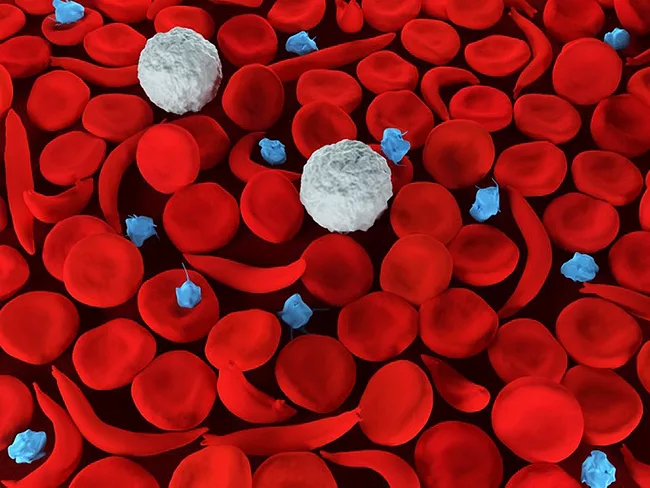
Individuals with both sickle cell disease (SCD) and sickle cell trait are at higher risk than others of developing renal medullary cancer (RMC), the rarest and deadliest subtype of kidney cancer. Researchers at MD Anderson Cancer Center have identified the molecular mechanisms behind the increased risk, gaining new insights into antitumor immunity more generally and, potentially, new ways to treat RMC, and possibly other tumors as well.SCD “has been studied for 30 years, but 95% of the effort [has been] working on the red blood cells … how red blood cells contribute to hypoxia and then reduce oxygen supply,” Chunru Lin told BioWorld.
Renal medullary carcinoma (RMC) is characterized by the complete loss of the SMARCB1 tumor suppressor, and it predominantly affects individuals with sickle cell trait (SCT), characterized by increased sickling of red blood cells in the renal medulla. It has been previously demonstrated that RMC tumors show a hypoxia signature, and in a recent study, researchers from MD Anderson Cancer Center aimed to investigate the connection between SMARCB1 loss and hypoxia under the setting of SCT.