South Korean researchers developed a novel quantum dot and parallel-stacked organic light-emitting diode (QD-PSOLED)-based wearable patch capable of being “freely tunable” in real-time, and described as a flexible and commercial-level technology with wide applications for health care wearables.
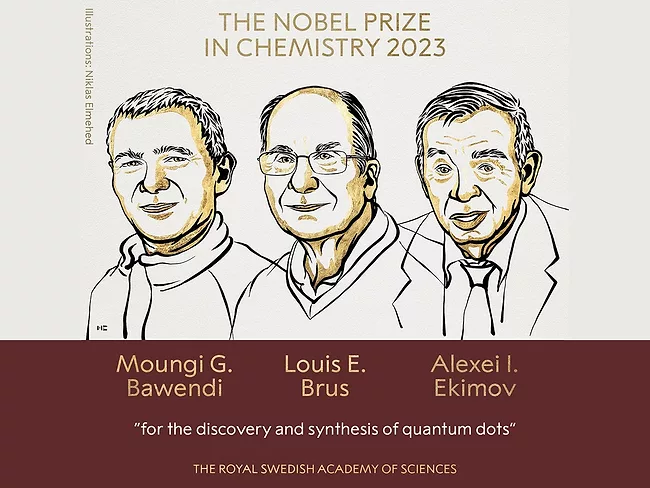
Quantum dots, a phenomenon in quantum physics that alters the energy of electrons and changes the properties of particles, caught the attention of the Royal Swedish Academy of Sciences (KVA) for the 2023 Nobel Prize in Chemistry.
Quantum dots, a phenomenon in quantum physics that alters the energy of electrons and changes the properties of particles, caught the attention of the Royal Swedish Academy of Sciences (KVA) for the 2023 Nobel Prize in Chemistry. Alexei Ekimov and Louis Brus received the award for their discovery; Moungi Bawendi, for developing its applications. With their work, “in equal shares,” said the Secretary General of KVA Hans Ellegren, the three scientists have laid the foundations of nanotechnology, a tool that we see today in our homes, on televisions and LED lamps, or in laboratories and hospitals for designing new drugs or new strategies against cancer.