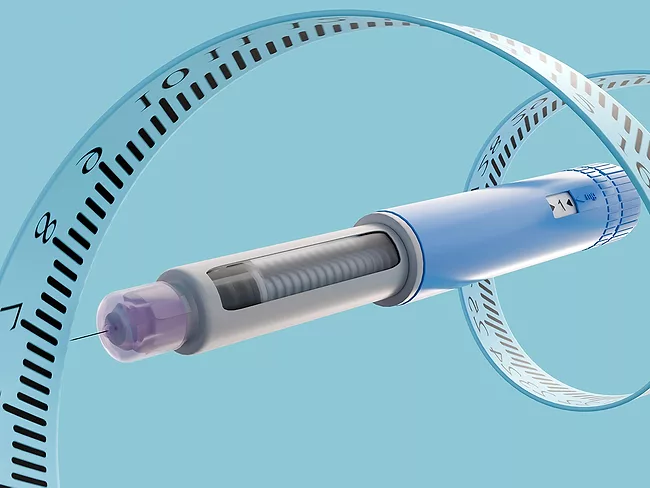
The GLP-1 fight has moved from injectables to pills, and Structure Therapeutics Inc. is in the ring with phase III-ready aleniglipron. According to the Bay Area biotech, its oral once-daily glucagon-like peptide-1 (GLP-1) drug candidate, aleniglipron, demonstrated an absolute weight loss of “up to 39 pounds” in the 44-week Access II trial.
Shares in Novo Nordisk A/S took another battering after the company announced its next-generation obesity drug Cagrisema failed to show noninferiority to Eli Lilly and Co. Inc.’s Zepbound in an open-label comparator study.
When glucagon-like peptide-1 (GLP-1) receptor agonists entered the market for obesity and overweight indications in recent years, the uptake and enthusiasm drove investor excitement for companies advancing any of the new mechanisms in the space.
Eli Lilly and Co.’s amylin receptor agonist, eloralintide, showed impressive weight loss and improved tolerability in phase II results reported at ObesityWeek 2025, setting the stage for a phase III trial to start next month. The once-weekly drug demonstrated superior mean weight reductions from 9.5% to 20.1% vs. only 0.4% for placebo over 48 weeks, with all treatment arms meeting the primary endpoint, mean percent change in body weight from the average baseline of 240.5 lbs. (109.1 kg).
Shares in Zealand Pharma A/S (CO:ZEAL) dropped 22.4% to as low as DKK587 (US$82.16) on Dec. 20, after the U.S. FDA issued a complete response letter (CRL) for glepaglutide in the treatment of short bowel syndrome.
Phase I data of oral amycretin, a co-agonist of GLP-1 and amylin receptors from Novo Nordisk A/S, showed a 13.1% reduction in body weight at 12 weeks vs. 1.1% for placebo, pushing shares of the Bagsvaerd, Denmark-based company to their highest levels to date.
If there is one therapeutic area for which numerous biopharma companies and investors have shown increasing amounts of interest in 2023, it is obesity through follow-on glucagon-like peptide-1 receptor agonists, as well as combination and solo efforts with other potential mechanisms. Analysts have suggested the obesity market (which includes overweight individuals) could grow to more than $50 billion by 2030. At least.
Glucagon-like peptide 1 receptor agonists have brought significant weight loss to patients, catching the attention of investors, but drug developers are continually seeking new therapies with different mechanisms to enhance the effects and improve the tolerability.