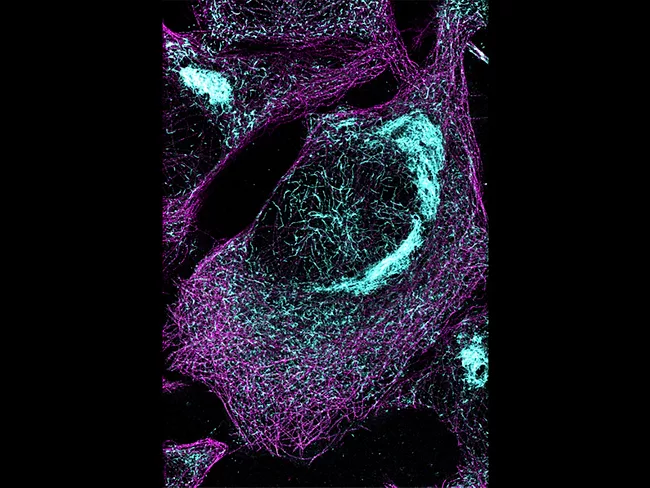
At the Alzheimer’s Association International Conference, researchers from Voyager Therapeutics Inc. presented preclinical efficacy data for VY-1706, a blood-brain barrier-penetrant AAV9 gene therapy designed to reduce tau levels in models of Alzheimer’s disease (AD).
The BioWorld Neurological Diseases Index (BNDI) ended May up 12.29% for the year, outpacing both the Nasdaq Biotechnology Index (up 4.95%) and the Dow Jones Industrial Average (up 6.18%), a reversal from 2025 when the BNDI trailed both broader benchmarks.
Voyager Therapeutics Inc. has obtained IND clearance from the FDA for VY-1706, the company’s investigational gene therapy for the treatment of Alzheimer’s disease.
Transition Bio Inc. and Voyager Therapeutics Inc. have entered into a drug discovery collaboration and license option agreement for novel, selective small molecules for amyotrophic lateral sclerosis (ALS) and frontotemporal dementia (FTD) with TDP-43 pathology.
Voyager Therapeutics Inc. has expanded its Alzheimer’s disease (AD) pipeline with the addition of a wholly owned program that modulates the expression of apolipoprotein E (APOE). Using a proprietary intravenous-delivered, blood-brain barrier (BBB)-penetrant Tracer capsid, the product delivers a bifunctional payload.
It is far easier and safer to inject drugs into veins than directly into the brain, yet it is extremely difficult for systemically delivered drugs to cross the blood-brain barrier and achieve therapeutic concentrations there.
Researchers from Voyager Therapeutics Inc. presented preclinical activity data of VY-1706, a blood-brain barrier (BBB)-penetrant gene therapy comprising an adeno-associated virus serotype 9 capsid (AAV9-C9P39) vector encoding primary artificial microRNA (pri-amiRNA) consisting of short-interfering RNA (siRNA) targeting human microtubule-associated protein tau (MAPT) protein.
Voyager Therapeutics Inc. has announced its decision to assess alternate payloads related to its gene therapy program for superoxide dismutase 1 (SOD1) amyotrophic lateral sclerosis (ALS). Emerging preclinical data indicate the siRNA payload component of VY-9323 does not meet its standards due to what appears to be an off-target effect resulting in a narrowed therapeutic window.
Voyager Therapeutics Inc.’s recent selection of a lead development candidate, VY-1706, for its tau silencing gene therapy program in Alzheimer’s disease brought renewed attention to the target, which continues to intrigue a substantial lineup of developers. Bellwether data rolled out this fall from UCB SA and Roche AG at the Clinical Trials in Alzheimer’s Disease meeting in Madrid.
Voyager Therapeutics Inc. has selected a lead development candidate, VY-1706, for its tau silencing gene therapy program in Alzheimer’s disease. The company anticipates filing an IND application with the FDA and a clinical trial application (CTA) with Health Canada for VY-1706 in 2026.