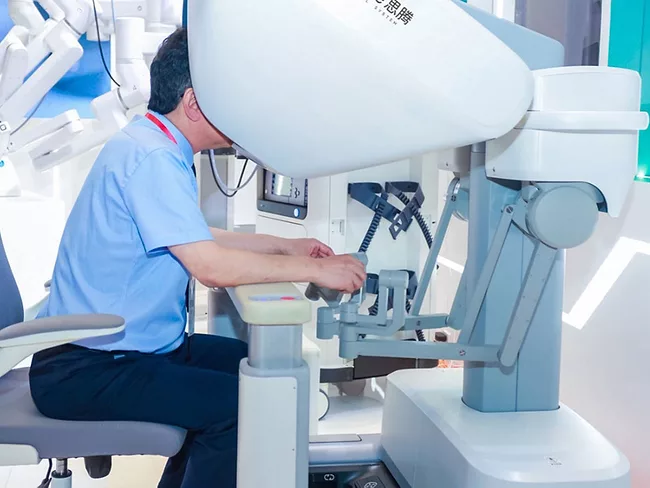
Cornerstone Robotics Ltd. raised more than $70 million in a series C round to expand its international footprint and accelerate R&D efforts for its robotic surgery solutions. The funds will allow the Hong Kong-headquartered company to accelerate commercialization of new surgical robotic products, conduct clinical trials, obtain regulatory approvals and promote global adoption of advanced robotic surgical solutions.
The Asia Pacific med-tech market is projected to reach $140 billion in 2025 in value, growing roughly 5% per year, driven largely by a rising demand for advanced and personalized medical technologies, including telemedicine and precision medicine.
A Chinese player entered the U.S. non-small-cell lung cancer (NSCLC) arena as the U.S. FDA cleared Xcovery Holdings Inc.’s Ensacove (ensartinib) as a first-line therapy for adults with anaplastic lymphoma kinase (ALK)-positive locally advanced or metastatic disease who have not previously received an ALK-inhibitor. Xcovery, of Palm Beach Gardens, Fla., is a subsidiary of Betta Pharmaceuticals Co. Ltd, of Hangzhou, China.
The Asia Pacific med-tech industry is expected to grow to $225 billion by 2030. Despite that rosy outlook, the landscape become increasingly challenging as med-tech investment saw a notable downturn since its peak in 2021, with venture financing and M&A deals decreasing by 22% and 37%, respectively, over the past two years.
A Chinese player entered the U.S. non-small-cell lung cancer (NSCLC) arena as the U.S. FDA cleared Xcovery Holdings Inc.’s Ensacove (ensartinib) as a first-line therapy for adults with anaplastic lymphoma kinase (ALK)-positive locally advanced or metastatic disease who have not previously received an ALK-inhibitor. Xcovery, of Palm Beach Gardens, Fla., is a subsidiary of Betta Pharmaceuticals Co. Ltd, of Hangzhou, China.
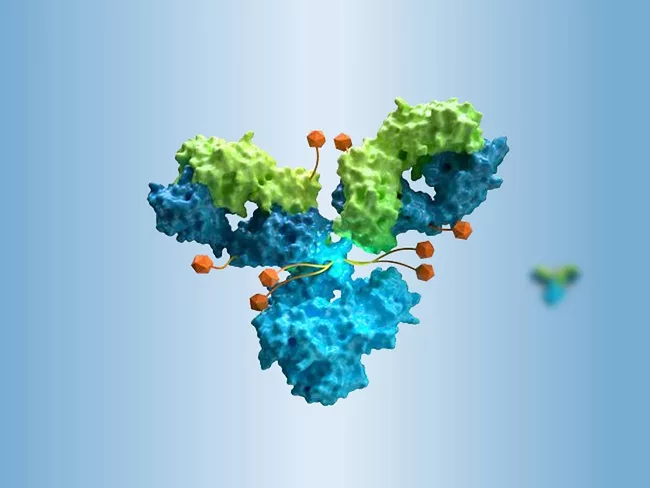
Sichuan Kelun-Biotech Biopharmaceutical Co. Ltd. won local approval of the first China-made trophoblast cell-surface antigen 2 (TROP2)-targeted antibody-drug conjugate (ADC), sacituzumab tirumotecan, as a third-line therapy for advanced breast cancer.
Sichuan Kelun-Biotech Biopharmaceutical Co. Ltd. won local approval of the first China-made trophoblast cell-surface antigen 2 (TROP2)-targeted antibody-drug conjugate (ADC), sacituzumab tirumotecan, as a third-line therapy for advanced breast cancer.
Apollo Therapeutics Group Ltd. and Sunshine Lake Pharma Co. Ltd. inked a potential $938 million licensing deal for APL-18881 (HEC-88473), Sunshine’s dual fibroblast growth factor 21 (FGF21)/glucagon-like peptide-1 (GLP-1) receptor agonist currently in a phase II study for type 2 diabetes.
Apollo Therapeutics Group Ltd. and Sunshine Lake Pharma Co. Ltd. inked a potential $938 million licensing deal for APL-18881 (HEC-88473), Sunshine’s dual fibroblast growth factor 21 (FGF21)/glucagon-like peptide-1 (GLP-1) receptor agonist currently in a phase II study for type 2 diabetes.
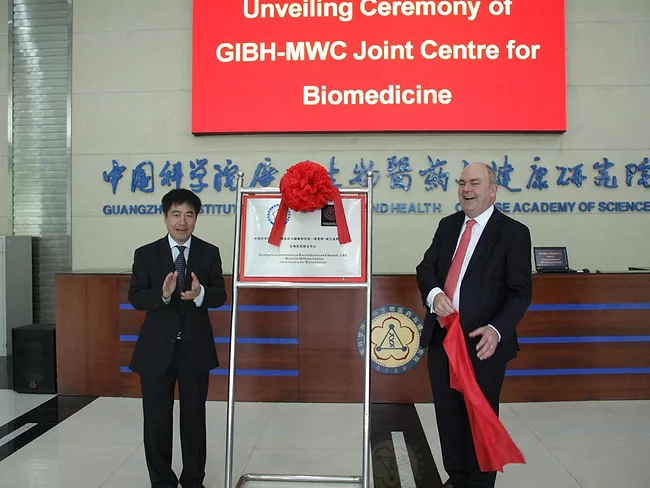
University of Auckland senior research fellow Jeff Smaill first visited China in 2012 as part of a team of 15 scientists from the Maurice Wilkins Center, one of New Zealand’s centers of excellence, to meet with scientists at the Guangzhou Institute of Medicine and Health to find partners to collaborate on drug development projects. The scientists started collaborating that year, and the first project is already in phase I trials in China. It was a joint discovery and development partnership from the beginning, he said.