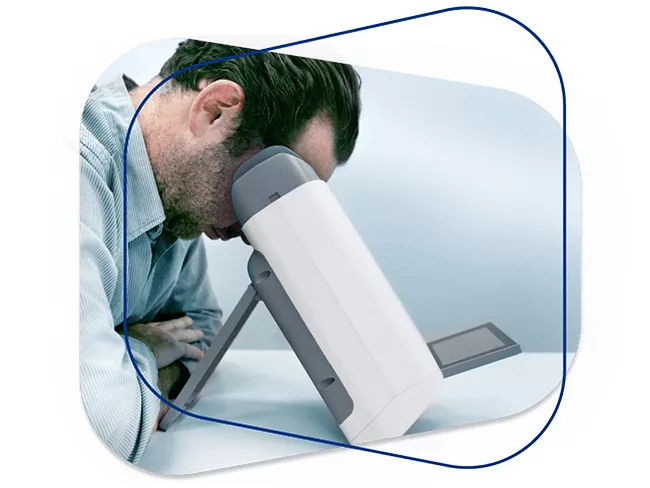
A collaboration between Aegis Ventures LLC and Northwell Holdings invested $12 million to launch New York-based Optain Inc., an artificial intelligence company created to enable early identification and disease prevention through retinal imaging. Retinal imaging is well known for identifying eye diseases including diabetic retinopathy, age-related macular degermation and glaucoma, but it can also provide insight into cardiovascular and neurological conditions.
Med-tech financings have continued to decline from 2021's peak when they brought in a combined total of $27.76 billion through April. In the first four months of 2022, that dropped 61.74% to $10.62 billion and this year they have fallen 44.16% to $5.93 billion. Broken out by type of financing, med-tech follow-ons are higher than the same period last year ($2.6 billion in early 2023 vs. $1.73 billion through April of last year).
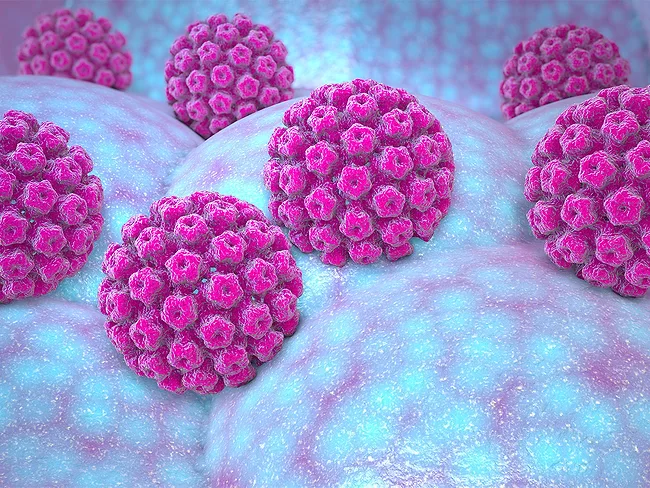
A precancerous condition caused by the human papillomavirus (HPV) affects up to 300,000 American women who are diagnosed each year, and yet there are no treatments, just preventive vaccines introduced in 2006 – targeted to younger generations prior to the first sexual encounter. That leaves a large proportion of the female population stuck with a “wait-and-see” approach that involves continuous monitoring of their HPV infection through pap smears to detect cellular changes that could lead to cervical cancer. South San Francisco-based Antiva Biosciences Inc. is seeking to find a better response to this condition known as high-grade cervical intraepithelial neoplasia (CIN2,3) with its lead topical therapeutic, ABI-2280, a prodrug of an acyclic nucleoside phosphonate that is currently in phase I trials.
Gilde Healthcare Partners BV raised €600 million (US$658 million) in capital commitments for a new investment fund which will be deployed into companies across Europe and the U.S active in digital healthcare, medical technology and therapeutics. The fund, ‘Venture&Growth VI’, will focus on investing in fast growing companies developing solutions for better care at lower cost.
The implosion of Silicon Valley Bank and of the investment bank Credit Suisse has left the current funding backdrop for life sciences “completely unclear” according to Jim Wilkinson, chief financial officer of Oxford Science Enterprises. “I had a cup of coffee yesterday with Credit Suisse, and with Morgan Stanley, and I talked to one of our co-investors who has accessed some cash for us. They all gave me completely different stories,” Wilkinson said.
Raising $15.6 billion through 276 transactions, the biopharma industry has experienced a respectable first quarter (Q1) in terms of financings, with a 14% jump over last year and higher amounts than the first quarters of many pre-pandemic years. The financings compare with $13.7 billion raised through 253 transactions in 2022’s Q1.
Raising $15.6 billion through 276 transactions, the biopharma industry has experienced a respectable first quarter (Q1) in terms of financings, with a 14% jump over last year and higher amounts than the first quarters of many pre-pandemic years. The financings compare with $13.7 billion raised through 253 transactions in 2022’s Q1. Private money remains the strongest source of capital in 2023, with venture capital bringing nearly 45% to the table and private investors in public companies bringing another 20%.
While the larger market has slowed, venture capital (VC) financing continues with two new funds, one from 35-year-old Canaan Partners and one from newbie Cure Ventures. The 13th fund from Canaan contains $850 million in new capital, including an oversubscribed $650 million fund intended for seed and series A funding. Cure Ventures launched its inaugural fund with $350 million in capital commitments.
For European biotech, the first quarter (Q1) of 2023 could hardly be described as the best of times – but the period did not represent the worst of times either. European firms engaged in drug discovery and development collectively raised $1.88 billion during this period. The tally is 4% less than the total raised in the comparable period last year, and it represents just 32% of the total raised during the COVID-19-fueled biotech boom during 2021. But it’s still the third highest Q1 raise during the last six years.
The France Biotech business association released its latest annual survey covering the health-tech sector in France. According to the 2022 edition of the Panorama, 1,440 med-tech, 880 bio-tech and 4,000 health and artificial intelligence software companies have been surveyed, responsible between them for $1.4 billion in sales revenues and 14,000 direct jobs, not counting the 2,200 new jobs planned for 2023 mainly in R&D, production and support services.