A catastrophe was averted over the weekend of March 11-12, 2023, when the U.K. government and the Bank of England orchestrated the rescue of the U.K. arm of Silicon Valley Bank, after its U.S. parent was shut down by the receiver. While that saved dozens of small biotechs with large deposits at the bank, it signified the fragile economic environment during the year, compounded by wider geopolitical frictions, with a market described by Chris Hollowood, CEO of Syncona Investment Management, as “the worst in my career.”
Gilde Healthcare Partners BV finally closed its Venture & Growth VI fund after raising €740 million (US$803 million) in commitments. The venture capital firm added €140 million to the €600 million unveiled earlier in the year due to strong interest from institutional investors.
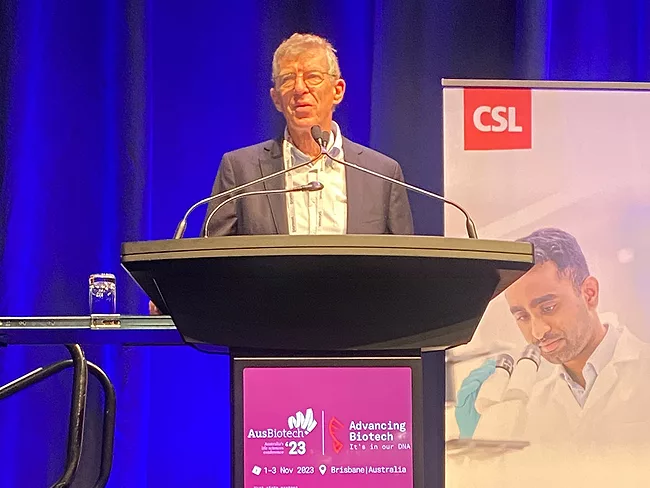
What’s it going to take for Australia’s biotech industry to be more self-sufficient? Although Australia is far away from the rest of the world, no one is an island when it comes to biotechnology, Ausbiotech CEO Lorraine Chiroiu said during the Ausbiotech 2023 conference held in Brisbane Nov. 1-3. Investors gathered to riff about what they were looking for in Australian biotech investments and what needs to change for the sector to be sustainable. All agreed that the science in Australia is top-notch but that the ecosystem needs more investment to be competitive.
What’s it going to take for Australia’s biotech industry to be more self-sufficient? Although Australia is far away from the rest of the world, no one is an island when it comes to biotechnology, Ausbiotech CEO Lorraine Chiroiu said during the Ausbiotech 2023 conference held in Brisbane Nov. 1-3. Investors gathered to riff about what they were looking for in Australian biotech investments and what needs to change for the sector to be sustainable. All agreed that the science in Australia is top-notch but that the ecosystem needs more investment to be competitive.
Japan’s economy has remained stagnant for the last few decades, and Prime Minister Fumio Kishida has heralded the biotech industry as a strategic industry to attract global partners, which was also one of the expectations for the BioJapan 2023 conference held Oct. 10-12 in Yokohama, drawing attendees from more than 37 countries and was the first live biotech industry event that welcomed foreigners since the COVID-19 pandemic.
Biopharma financings in 2023 – at $49.3 billion raised through the third quarter (Q3) – are tracking ahead of, or only slightly behind, several years since 2011, except for the two outlier years of 2020 and 2021 when there was a flurry of investments in response to the COVID-19 pandemic.
Biopharma financings in 2023 – at $49.3 billion raised through the third quarter (Q3) – are tracking ahead of, or only slightly behind, several years since 2011, except for the two outlier years of 2020 and 2021 when there was a flurry of investments in response to the COVID-19 pandemic.
Biopharma financings in 2023 – at $49.3 billion raised through the third quarter (Q3) – are tracking ahead of, or only slightly behind, several years since 2011, except for the two outlier years of 2020 and 2021 when there was a flurry of investments in response to the COVID-19 pandemic.
Japan’s economy has remained stagnant for the last few decades, and Prime Minister Fumio Kishida has heralded the biotech industry as a strategic industry to attract global partners, which was also one of the expectations for the BioJapan 2023 conference held Oct. 10-12 in Yokohama, drawing attendees from more than 37 countries and was the first live biotech industry event that welcomed foreigners since the COVID-19 pandemic.
To get ahead in a tough market like the industry now finds itself, companies are advised to know themselves and their business well, better than they probably think they know themselves. A panel of investors at the BioFuture 2023 conference cautioned that CEOs must have a deep understanding of how their companies are differentiated from their competition in order to thrive.