Simultaneous inhibition of phosphoinositide 3-kinase (PI3K) and histone deacetylase (HDAC) is considered a good strategy in cancer treatment, although current PI3K/HDAC dual inhibitors have limitations, such as low selectivity and moderate toxicity levels.
From the start of the Nov. 16 Oncologic Drugs Advisory Committee meeting, the U.S. FDA made it clear that withdrawing Acrotech Biopharma Inc.’s peripheral T-cell lymphoma drugs, Folotyn (pralatrexate) and Beleodaq (belinostat), from the market until a long-overdue confirmatory trial is completed is not an option given the current treatment landscape.
If there had been any lingering market concerns following the temporary partial clinical hold earlier this year for Arcellx Inc.’s multiple myeloma CAR T-cell therapy, CART-ddBCMA, they were likely put to rest as partner Gilead Sciences Inc.’s Kite unit expanded the scope of the firms’ late 2022 collaboration to include lymphomas. At the same time, Kite exercised an option to negotiate a license for Arcellx’s ARC-Sparx program, ACLX-001, in multiple myeloma.
If everything goes according to the current plan, the U.S. FDA would get the final report of a confirmatory trial for Acrotech Biopharma Inc.’s Folotyn (pralatrexate) and Beleodaq (belinostat) in 2030 – more than two decades after Folotyn received accelerated approval to treat relapsed or refractory peripheral T-cell lymphoma and 16 years after Beleodaq was granted accelerated approval for the same indication.
Mucosa-associated lymphoid tissue lymphoma translocation protein 1 (MALT1) is a key regulator of immune signaling that supports proliferation and promotes metastasis while maintaining the tumor microenvironment under immunosuppression. Researchers from Exscientia plc and Evotec SE reported on the characterization of EXS-73565.
Antibody-drug conjugates (ADCs) are effective anti-cancer agents in a wide variety of solid and hematologic cancers. CD30 (TNFRSF8), a member of the TNF receptor superfamily is the target of antibody drug conjugate Adcetris (brentuximab vedotin/BV, Seagen Inc.) approved for use in multiple CD30-expressing lymphomas.
Tegid Therapeutics Inc. has identified proteolysis targeting chimera (PROTACs) compounds comprising cereblon (CRBN) ligands covalently bonded to a mucosa-associated lymphoid tissue lymphoma translocation protein 1 (MALT1)-targeting moiety.
The discovery of new 68Ga-labeled CD38-targeted peptides for PET imaging was recently discussed by researchers from Peking University First Hospital and China National Center For Nanoscience & Technology.
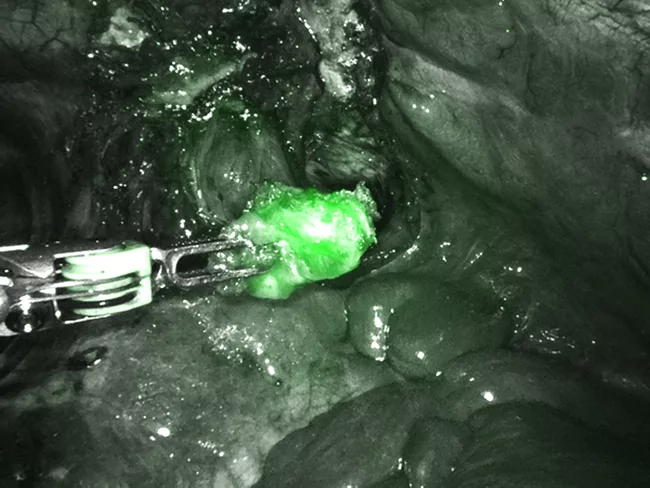
A fluorescent imaging agent developed by Vergent Bioscience Inc. enables visualization of elusive and previously undetected tumors, a phase II study presented last week at the 2023 World Conference on Lung Cancer (WCL23) demonstrated. The ability of the tumor-targeting agent, Vgt-309, to illuminate tumors could help surgeons more precisely locate tumors, better ensure clean margins and guide care decisions. In 10% of cases, the agent revealed unknown tumors in lymph nodes, which could affect which nodes are biopsied as well as when or whether a systemic therapy is recommended.
Bruton tyrosine kinase (BTK) is involved in cell proliferation and survival in B-cell malignancies. Both covalent and noncovalent BTK inhibitors are in place, but their clinical benefit may be limited due to acquired BTK mutations.