Using a minimally invasive brain implant, Feinstein Institutes for Medical Research scientists produced tingling sensations in the fingers of patients who lacked the sense of touch as a result of nerve damage, according to a study published in Brain Stimulation. A second study by the team, which appeared in Frontiers in Neuroscience, used stereoelectroencephalography (SEEG) electrodes to decode neural signals to improve the hand control algorithms in brain-computer interfaces.
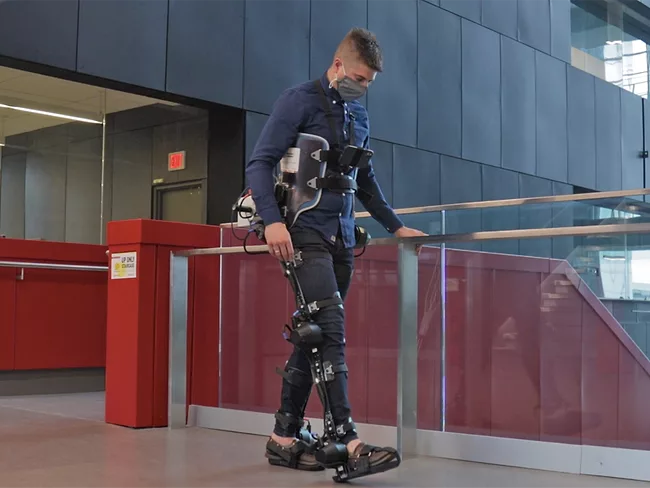
TORONTO – Robotics researchers at Ontario’s University of Waterloo are stealing a page from makers of autonomous or self-driving vehicles, developing wearable, motor-controlled technology to restore physical mobility in people with disabilities without the need to think about or guide the system. The project, called Exonet, is being led by Brokoslaw Laschowski, who contrasts this approach with engineers ramping up the ability of users to control the exoskeleton.
TORONTO – A Canadian plant-based, cellulose scaffold implant for regenerating healthy spinal cord tissue has received U.S. FDA breakthrough device designation. The designation will enhance the process by which Ottawa-based Spiderwort Inc. interacts with the FDA during regulatory review of the Cellubridge implant, said Spiderwort CSO and cofounder Andrew Pelling, speeding its way to clinical trials.
Researchers at the Karolinska Institute have spurred neural stem cells to produce myelin-forming oligodendrocytes, facilitating repair after spinal cord injury.
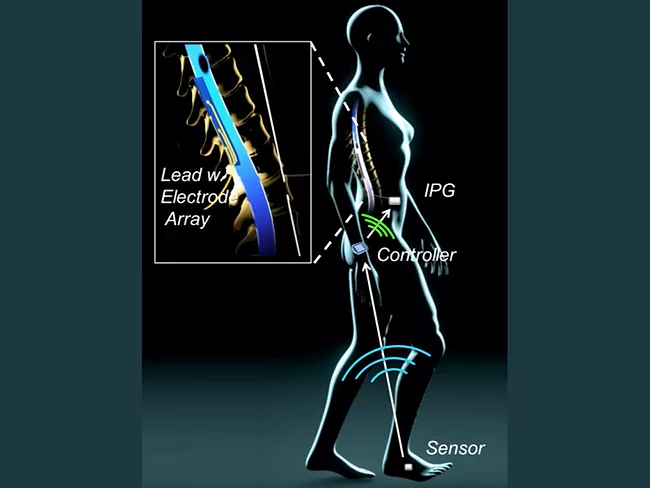
The U.S. FDA granted Gtx Medical BV a breakthrough device designation for its implantable Go-2 Targeted Epidural Spinal Stimulation (TESS) system. The device enabled patients who had sustained traumatic spinal cord injuries to regain voluntary control over previously paralyzed muscles and walk again four or more years after paralysis, according to a study previously published in Nature.
PERTH, Australia – With new funding in hand from Yamaha Motor Ventures & Laboratory Silicon Valley Inc., Loop+ founders and sisters Kath Hamilton and Clare Conroy and are on their way to commercializing a pressure and movement tracking device they developed for wheelchair-bound patients.
Spinal cord stimulation company Gtx Medical BV, of Eindhoven, Netherlands, is merging with San Juan Capistrano, Calif.-based Neurorecovery Technologies Inc. in a move aimed at accelerating access to new therapies for spinal cord injury on both sides of the Atlantic. The combined company, which will be known as Gtx Medical BV, is developing both implantable and transcutaneous technologies for people living with paralysis. Financial terms of the deal were not disclosed.