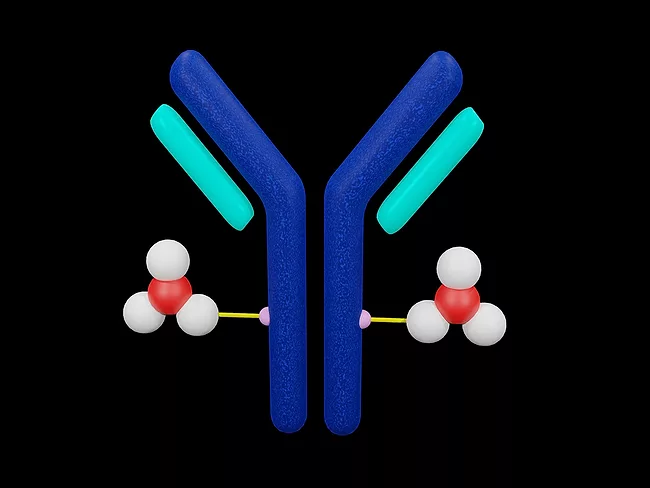
Legochem Biosciences Inc. has entered into a license agreement with Elthera AG to develop and commercialize a novel antibody-drug conjugate (ADC) therapy using a monoclonal antibody developed by Elthera.
Wigen Biomedicine Technology (Shanghai) Co. Ltd. has disclosed fused ring compounds acting as Wee1-like protein kinase (Wee1) inhibitors reported to be useful for the treatment of cancer.
Sichuan Kelun-Biotech Biopharmaceutical Co. Ltd. has disclosed proteolysis targeting chimera (PROTAC) compounds comprising an E3 ubiquitin ligase binding moiety covalently linked to a GTPase KRAS (G12D mutant) targeting moiety reported to be useful for the treatment of cancer.
Lung and pancreatic cancer cells usually become chemotherapy resistant; the alternative to target nonapoptotic pathways was hypothesized as an approach for treating these cancers. Researchers from Sun Yat-sen University and their collaborators focused on the activation of pyroptosis as a therapeutic alternative to treat these resistant tumor types.
Dxcover Ltd. raised $9.25 million (£7.5 million) in a series A fundraising round and received a grant of $2.7 million (£2.2 million) from the European Innovation Council to support development of the company’s liquid biopsy platform for the detection of multiple early-stage cancers. Existing investors Eos Advisory LLP, Mercia Asset Management plc, Scottish Enterprise, University of Strathclyde, SIS Ventures and Norcliffe Capital led the round, which was also joined by Mark Banforth of Thairm Bio.
Kanaph Therapeutics Inc. and Yungjin Pharmaceutical Co., Ltd. have presented tyrosine-protein phosphatase nonreceptor type 11 (PTPN11) inhibitors reported to be useful for the treatment of immunological, cardiovascular, eye disorders, fibrosis, cancer, Noonan syndrome, LEOPARD syndrome and neurofibromatosis type 1.
Incyte Corp. has disclosed GTPase KRAS (mutant) inhibitors reported to be useful for the treatment of cancer, inflammatory and immunological disorders.
Recurv Pharma Inc. is set to receive investment of up to $24 million from TVM Capital Life Science GmbH to support development up to phase IIa proof of concept of RP-001 to treat solid tumors.
Medshine Discovery Inc. has presented benzylamino tricyclic compounds acting as GTPase KRAS (G12C mutant) inhibitors reported to be useful for the treatment of cancer.
Alphamab (Jiangsu) Biopharmaceuticals Co. Ltd. has identified new antibody-drug conjugate (ADC) comprising bispecific antibodies targeting HER2 covalently bound to cytotoxic drugs through a linker reported to be useful for the treatment of cancer.