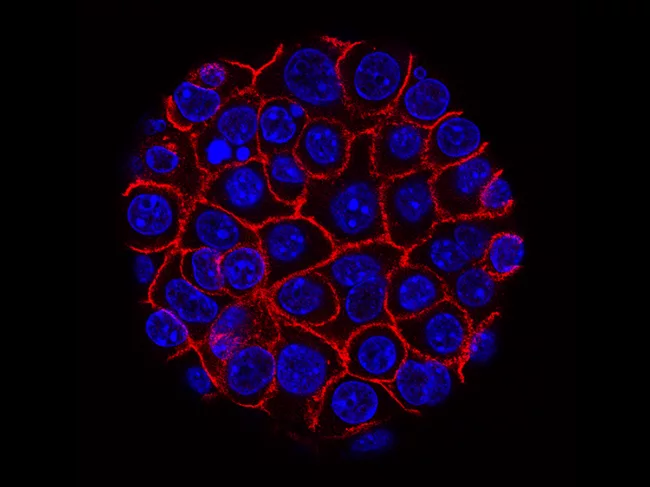
Tumors have a lower interstitial pH compared to healthy tissues, with tumor acidity having emerged as a driver of tumor progression as it can lead to tumor immune evasion. Solute carrier family 4 member 4 (SLC4A4), which encodes a sodium bicarbonate cotransporter involved in pH regulation and homeostasis in normal tissue, was the focus of studies in pancreatic cancer resistance in in vivo preclinical models. Researchers tested the impact of Slc4a4 deletion in cancer cells on tumor growth, anticancer immunity and response to immunotherapy in murine models of pancreatic ductal adenocarcinoma (PDAC).
Bertis Co. Ltd.’s artificial intelligence (AI)-based diagnosis model is able to detect diseases, such as cancers, with more than 95% accuracy, according to preliminary testing results reported at the Human Proteome Organization 2022 meeting in Cancun, Mexico on Dec. 8.
Pancreatic cancer is the deadliest of cancers with just one in nine patients surviving five years after diagnosis. The low rate of survival largely results from the late stage at which the cancer is first detected, as 65% patients are not diagnosed until the disease has metastasized. Bluestar Genomics Inc. hopes it has developed an assay that can detect the cancer much sooner, allowing patients and their physicians to get ahead of the malignancy well before it spreads.
Researchers from Jecho Laboratories Inc. and Shanghai Jiao Tong University reported the discovery of a novel anti-PD-L1/CXCR4 bispecific nanobody, BsNb PX-4, being developed for the treatment of cancer.
Molecure SA has received clearance from the Polish Office for Registration of Medicinal Products, Medical Devices and Biocidal Products to conduct the first clinical trial of OATD-02.
Wigen Biomedicine Technology (Shanghai) Co. Ltd. has described pyrrolopyrimidine derivatives as Wee1-like protein kinase (Wee-1) inhibitors reported to be useful for the treatment of cancer.
Immunocytokines (ICs) engage multiple mechanisms of action by the use of antibodies to deliver cytokine payloads to the surface of the same immune cell, known as cis-signaling. Researchers from Bright Peak Therapeutics AG have developed ICs by using a novel approach based on site-specific chemical conjugation of engineered cytokines to existing nonmodified antibodies.
Astellas Pharma Inc.’s zolbetuximab, a monoclonal antibody targeting Claudin 18.2, met the primary endpoint of progression-free survival in the phase III Spotlight trial in CLDN18.2-positive, HER2-negative, locally advanced unresectable or metastatic gastric or gastroesophageal junction adenocarcinoma, according to top-line data.
Genfleet Therapeutics (Shanghai) Inc. has divulged pyridino- or pyrimido-cyclic compounds acting as GTPase KRAS (G12D mutant) inhibitors reported to be useful for the treatment of cancer.