Two-year data from Elixir Medical Corp.’s Bioadaptor randomized controlled trial showed that there is a significant clinical advantage in using its Dynamx coronary drug-eluting bioadaptor system over Medtronic plc’s Resolute Onyx drug-eluting stent in patients with coronary artery disease.
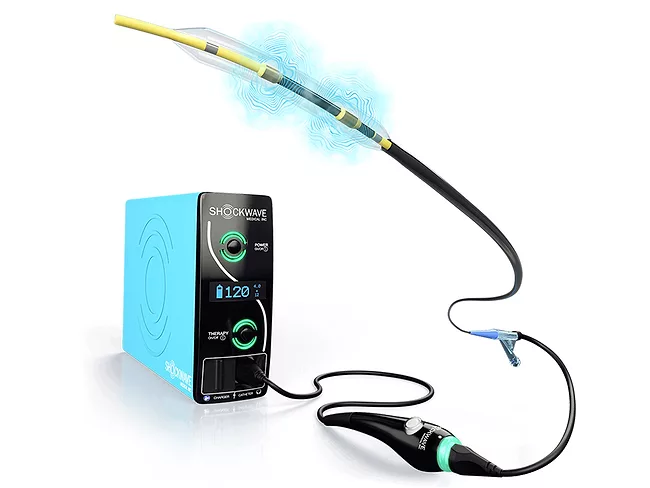
Med-tech powerhouse Johnson & Johnson made a bold bid to bolster its interventional cardiology holdings with the news on April 5 that it is acquiring Shockwave Medical Inc. for approximately $13.1 billion including cash acquired. The $335 per share cash price represents a more than 5% premium to Shockwave’s (Nasdaq: SWAV) April 4 closing price.
South Korean medical software firm Coreline Soft Co. Ltd. said it gained U.S. FDA 510(k) clearance for its artificial intelligence-based coronary artery calcification assessing solution, Aview CAC, while raising ₩18 billion (US$13.33 million) in a private placement.
Researchers from Broad Institute Inc. and affiliated organizations have reported data from a study that highlighted a new variant-to-gene-to-program (V2G2P) approach designed to link variants from genome-wide association studies (GWAS) to genes and identify their convergence onto specific disease-associated transcriptional programs.
The Cari-Heart, a medical imaging technology which detects signs of inflammation around coronary arteries, can predict the risk of a cardiac event, independent from clinical risk scores and the interpretation of coronary computed tomography angiography (CCTA), according to data from a study presented at the recent American Heart Association Scientific Sessions.
The EU approved the first drug-coated balloon for treatment of in-stent restenosis nearly a decade ago, but U.S. physicians continue to have their hands tied in treating the fairly common problem. Results from Boston Scientific Corp.’s investigational device exemption trial for its Agent paclitaxel-coated balloon presented in San Francisco at Transcatheter Cardiovascular Therapeutics could finally put the tool in the hands of cardiologists. The device demonstrated a nearly 50% reduction in the risk of target lesion revascularization and target vessel myocardial infarction compared to conventional balloon angioplasty.
Caristo Diagnostics Ltd. is deploying its medical imaging technology, Cari-Heart, at several NHS hospitals in a pilot project that will help identify patients at risk of heart attack years before it occurs. Cari-Heart detects signs of inflammation around coronary arteries. “No other company is doing this,” Frank Cheng, CEO of Caristo told BioWorld. “No one is using CT to quantify and visualize coronary inflammation” to predict the risk of a heart attack years in advance.
Shockwave Medical Inc. enrolled the first patient in its EMPOWER CAD study, the first prospective, all-female study of percutaneous coronary intervention (PCI). The study seeks to confirm the benefits of coronary intravascular lithotripsy (IVL) in female patients with calcified lesions. Women have historically been underrepresented in cardiovascular trials and have had less favorable outcomes in response to therapies.
Heartflow Inc. is feeling the love of investors again as it closed a $215 series F financing round led by Bain Capital Life Sciences. The round marks a return to the equity markets after several years away; the company closed its series E in 2017 and a $65 million venture round in 2019. In early 2022, Heartflow scrapped its plans to go public through a special purchase acquisition company (SPAC) merger with Longview Acquisition, citing what both companies called “current unfavorable market conditions.” Longview had offered $690 million in July 2021, in a deal that implied an enterprise value of $2.4 billion at the time.
Coronary artery disease (CAD) will likely remain the worldwide leading cause of death for the next couple of decades. Genome-wide association studies (GWAS) have been useful to identify hundreds of genomic loci that contribute CAD risk.