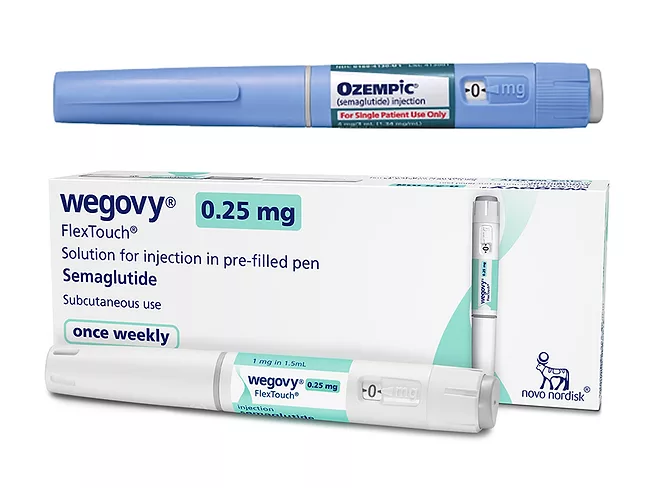
There was a time not that long ago when Merck & Co. Inc.’s Keytruda (pembrolizumab), with its multiple cancer indications, was seen as the heir apparent to Humira’s title of the biggest blockbuster drug. Not anymore. That title now belongs to Novo Nordisk A/S’ semaglutide, approved as Ozempic in 2017 to treat diabetes and as Wegovy in 2021 to help with weight loss.
Having failed in their efforts to get the U.S. NIH to march in on Xtandi’s patents under the Bayh-Dole Act because of price, Knowledge Ecology International and two other advocacy groups are now asking the Centers for Medicare & Medicaid Services (CMS) to do what the NIH refused to do. But rather than pressing for a march-in, which can be a lengthy process, the groups are pushing for CMS to use other statutory tools to clear the way for Xtandi (enzalutamide) generics to launch in the U.S. before Astellas Pharma Inc.’s three remaining patents for the prostate cancer drug expire in 2026 and 2027.
While some states are beginning to double down on the prices they pay for prescription drugs, the state of Colorado is taking it to a whole new level with its Prescription Drug Affordability Review Board that was empowered to set maximum prices of prescription drugs it considers “unaffordable.”
With two U.S. courts rejecting constitutional challenges to Medicare drug price negotiations, every company that had a drug selected for the first round of negotiations countered Medicare’s initial offer of what it considered a maximum fair price by the March 2 deadline, according to the Biden administration.
One down, eight to go. That’s the scorecard for the constitutional challenges to mandatory Medicare drug price negotiations now that a U.S. federal court has dismissed a suit filed by the Pharmaceutical Research and Manufacturers of America, the National Infusion Center Association and the Global Colon Cancer Association.
Court rulings favoring biopharma companies that have challenged the U.S. Department of Health and Human Services’ efforts to force them to unconditionally offer 340B prescription drug discounts to an unlimited number of contract pharmacies could become moot in the future if a bipartisan draft bill becomes law.
In a historic first, the U.S. Centers for Medicare & Medicaid Services (CMS) sent out its opening offers Feb. 1 for the first round of prescription drug price negotiations.
What’s the status of the U.S. FTC’s investigation into pharmacy benefit managers’ (PBMs) role in prescription drug prices? Inquiring minds in the Senate really want to know, especially since the investigation began more than 18 months ago. “We urge the FTC to complete its 6(b) study in a timely manner,” 14 senators, led by Sens. Chuck Grassley (R-Iowa) and Maria Cantwell (D-Wash.), wrote in a Jan. 22 letter to FTC Chair Lina Khan.
With little fanfare, the Biden administration dropped its appeal Jan. 16 of a recent court decision that vacated a 2021 U.S. Health and Human Services rule permitting health insurance issuers and group health plans to use so-called copay accumulator adjustment programs that prevent drug manufacturers’ copay assistance from counting toward a patient’s deductible or out-of-pocket maximum.
U.S. Sen. Bernie Sanders (I-Vt.), chair of the Health, Education, Labor and Pensions Committee, is not taking no for an answer after the CEOs of Johnson & Johnson (J&J) and Merck & Co. Inc. declined an invitation to appear before the committee to explain their U.S. drug prices.