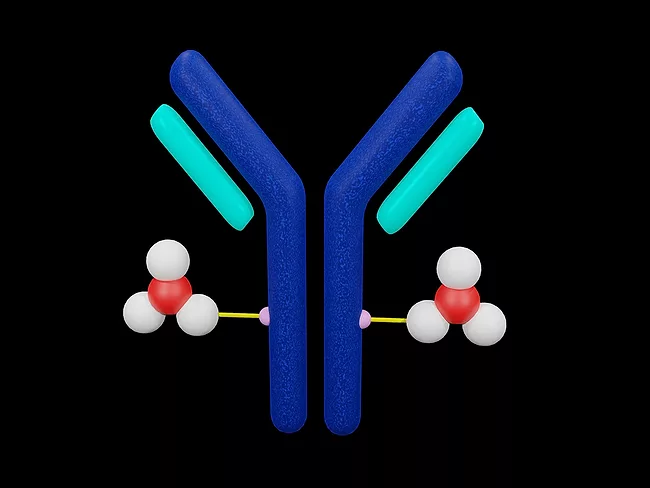
The zeal for antibody-drug conjugates (ADCs), a prominent focus for dealmaking in 2023, shows no signs of waning, as Johnson & Johnson greeted attendees of the J.P. Morgan Healthcare Conference (JPM) with news of its $2 billion buyout of Ambrx Biopharma Inc., picking up rights to an ADC platform along with a promising candidate targeting advanced prostate cancer. Under the terms, J&J agreed to acquire all outstanding shares of San Diego-based Ambrx for $28 apiece, marketing a 105% premium to the firm’s Jan. 5 closing price. Unsurprisingly, Ambrx’s stock (NASDAQ:AMAM) gained 101.5% to close Jan. 8 at $27.47.
Quanta Therapeutics Inc. has announced progression of its pipeline of KRAS-directed drug candidates, with the receipt of IND approval from the FDA for QTX-3034.
Amid a flurry of dealmaking activity to start 2024, Allorion Therapeutics Inc., a 2020 startup based in Natick, Mass., and Guangzhou, China, has been extra busy. Two days after disclosing a potential $540 million deal with Astrazeneca plc, Allorion inked a licensing agreement with Avenzo Therapeutics Inc. that could total more than $1 billion.
Three months out from its first $1 billion deal with Biontech SE for an antibody-drug conjugate (ADC), Suzhou, China-based Medilink Therapeutics Co. Ltd. clinched another potential $1 billion ADC deal, but this time with Roche Holding AG.
Medilink Therapeutics (Suzhou) Co. Ltd. has entered into a worldwide collaboration and license agreement with F. Hoffmann-La Roche Ltd. for the development of YL-211, a next-generation antibody-drug conjugate candidate targeting proto-oncogene c-Met for solid tumors.
Obi Pharma Inc. has received FDA clearance for its IND application to conduct a phase I/II study of OBI-992, a novel antibody-drug conjugate (ADC) cancer therapy targeting TROP2. The trial will open shortly and aims to enroll patients with advanced solid tumors, including non-small-cell lung cancer, small-cell lung cancer and gastric cancer, although several other cancers are also potential targets.