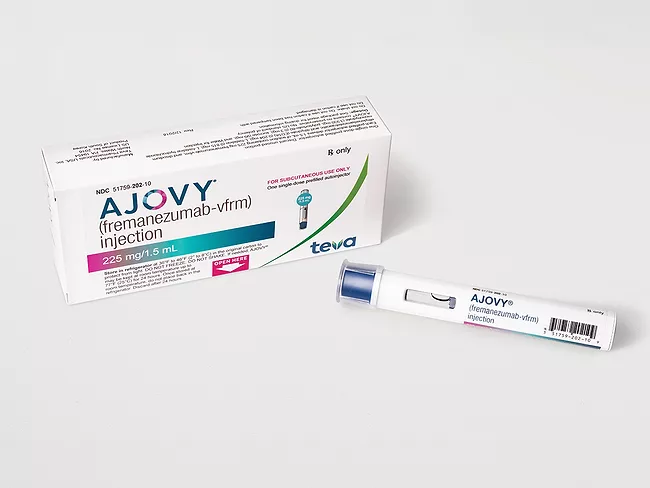
Ever since Teva Pharmaceutical Industries Ltd. sued Eli Lilly and Co. several years ago, claiming Lilly’s migraine drug, Emgality (galcanezumab), infringed its headache treatment patents, the two companies have been on a litigation rollercoaster.
In handing a win to Regenxbio Inc., the U.S. Court of Appeals for the Federal Circuit also cleared some leaves from the 101 patent eligibility threshold after years of Supreme Court decisions cluttering the passageway.
Sandoz Inc. came out the big winner Nov. 18 when the U.S. Court of Appeals for the Federal Circuit wiped out $39 million in infringement damages a jury had awarded to Allergan plc. Sandoz overcame “the doubly high burden of persuading us to overturn a jury verdict of no invalidity,” the appellate court said in its precedential opinion.
While the final word has yet to be written, Stryker Corp. came out the biggest winner in a dispute involving four related patents owned by Osteomed LLC, part of Colson Associates’ Acumed.
Planting seed money and “wishing” is not enough to claim “irreparable harm” to secure a preliminary injunction or to establish the standing required to appeal a patent board decision, the U.S. Court of Appeals for the Federal Circuit ruled May 7 in two decisions involving Incyte Corp. and Sun Pharmaceutical Industries Ltd.
Finding that a lower court went too far with an injunction that ignores the Hatch-Waxman safe harbor protections for drug development, the U.S. Court of Appeals for the Federal Circuit handed Avadel CNS Pharmaceuticals LLC a win of sorts.
Planting seed money and “wishing” is not enough to claim “irreparable harm” to secure a preliminary injunction or to establish the standing required to appeal a patent board decision, the U.S. Court of Appeals for the Federal Circuit ruled May 7 in two decisions involving Incyte Corp. and Sun Pharmaceutical Industries Ltd.
Much of U.S. patent law jurisprudence still revolves around subject matter eligibility, but a new decision by the Court of Appeals for the Federal Circuit revisits the question of what constitutes obviousness in patent applications. The court remanded the case between Irvine, Calif.-based Axonics Inc. and Dublin-based Medtronic plc to the Patent Trial and Appeal Board (PTAB) after determining that the PTAB judge’s understanding of obviousness is “doubly infected by error” in a decision that seems to offer some much-needed clarity where obviousness is concerned.
Most of the decisions arising from the inter partes review (IPR) process used in the U.S. patent system are the final word on the related patent dispute, but Guardant Health Inc., managed to at least temporarily reverse such an outcome recently. The Court of Appeals for the Federal Circuit reversed an IPR determination that 16 claims found in a patent held by Guardant were obvious and kicked the case back to the Patent Trial and Appeal Board (PTAB) for further consideration, but the affected patent is not clear of an adverse determination just yet.
Alivecor Inc. has nudged the U.S. International Trade Commission (ITC) into issuing a limited exclusion order for products by Apple Inc. that are said to violate patents held by Alivecor, but there is one more stage gate to go for Alivecor. The ITC order notes that the exclusion won’t go into force until resolution of an inter partes review (IPR) involving the two firms, a process that could devour as much as a year and a half before a resolution is available.