Acting on its new promise to restore “rigorous enforcement” of the U.S. ban on unfair methods of competition, the FTC filed an amicus brief Nov. 10 supporting Avadel CNS Pharmaceuticals LLC’s motion to delist a Jazz Pharmaceuticals Inc. patent from the FDA’s Orange Book.
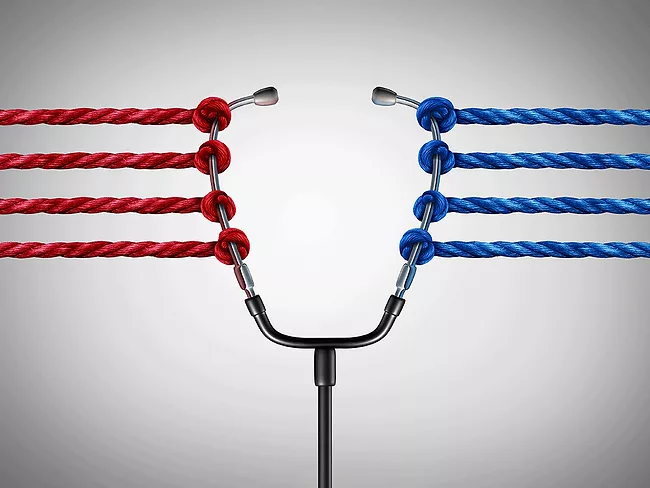
Election day has come and gone in the U.S., but the question of which party will control Congress remains unanswered, signaling that the country is as divided as ever politically and ideologically. While Democrats and Republicans may agree on problems in the life sciences sector, they often disagree on how to address them.
Teva Pharmaceuticals USA Inc.’s quest to get the U.S. Supreme Court to overturn the Federal Circuit and preserve label carveouts, or so-called skinny labels, continued Oct. 3 with the high court asking the solicitor general to weigh in.
If the U.S. Supreme Court agrees to hear Teva Pharmaceuticals USA Inc. vs. Glaxosmithkline LLC, it could be one of the biggest biopharma cases on the court’s calendar in the coming year. But that’s still an if. Whether the patent infringement case involving a so-called “skinny label” makes it to the high court’s docket depends on which interpretation of the underlying question the court accepts.
It pays to read the details of patent specifications. By keeping the pH range of its generic vasopressin injection at least 0.01 below that specified for Vasostrict, Eagle Pharmaceuticals Inc. cleared itself from claims that it had infringed two key patents protecting the brand drug.
An investor’s wish to know more about the total landscape of a drug candidate is not enough, on its own, to make a company’s disclosures about the drug and its development materially misleading. So said the U.S. Court of Appeals for the First Circuit in affirming the dismissal of a shareholder suit against Karyopharm Therapeutics Inc. and its executive officers.
How many patents does it take to violate U.S. antitrust law? That question isn’t a lead-in to a lame joke. Neither is it a valid question for a patent challenge, according to the U.S. Court of Appeals for the Seventh Circuit, which Aug. 1 affirmed the dismissal of a payer suit against Abbvie Inc. that claimed the North Chicago drug company violated the Sherman Antitrust Act when it obtained 132 patents on Humira (adalimumab) and then invoked them against biosimilars.
It’s not a done deal yet, but Teva Pharmaceutical Industries Ltd. has agreed in principle to pay up to $4.25 billion, plus about $100 million to Native American tribes, to end most of the lawsuits it’s facing across the U.S. over its opioid sales. The figure includes settlements the company already has made with some state and local governments, as well as the supply of up to $1.2 billion worth of Teva’s generic naloxone nasal spray.
As a last-ditch effort to preserve skinny labeling for generics, Teva Pharmaceuticals USA Inc. is asking the U.S. Supreme Court to review a Federal Circuit split opinion in Glaxosmithkline plc v. Teva Pharmaceuticals that upset the status quo of the generic marketplace.
A U.S. federal jury breathed new life into so-called pay-for-delay settlements when it found that a 2010 agreement between Endo International plc and Impax Laboratories LLC was procompetitive as it allowed Impax to launch its generic version of Opana ER, an opioid pain drug, before key patents expired.