The lung and thrombosis may play a key role in cancer and metastasis progression, according to a collaborative study led by Cornell University scientists.
The lung and thrombosis may play a key role in cancer and metastasis progression, according to a collaborative study led by Cornell University scientists. In the nonmetastatic lung microenvironment of several cancer types, the development of a prothrombosis niche promotes metastasis formation through the release of small extracellular vesicles loaded with an integrin protein.
Sunbird Bio Inc. closed an additional financing round of $14 million Oct. 16, reeling in new funding from Eli Lilly & Co. and the Singapore Economic Development Board’s investment arm, EDBI Pte Ltd.
Sunbird Bio Inc.’s Neural EV-tau aggregate assay demonstrated 92% correlation with PET scans in identifying individuals with Alzheimer’s disease, a study presented at the Alzheimer’s Association International Conference in Philadelphia, on July 30 found.
Researchers from Tokyo Medical University presented data from a study that assessed microRNA (miRNA) profiles in extracellular vesicles (EVs) isolated from vitreous humor and serum of patients with ocular sarcoidosis and vitreoretinal lymphoma (VRL).
Over the past decade there has been much research into the use of induced pluripotent stem cells (iPSCs) as a cell therapy to regenerate tissue and treat heart disease. Now, one researcher has narrowed the focus down to treating heart disease not with whole cells, but with mitochondria derived from iPSCs. Gentaro Ikeda, a researcher at the Department of Medicine at Stanford University, has worked on generating extracellular vesicles (EVs) containing mitochondria from pluripotent stem cell-derived cardiomyocytes and administering these to restore the functionality of the myocardium in a porcine model of an infarct.
Mercy Bioanalytics Inc. stepped into the increasingly competitive early cancer detection field with a $41 million series A financing round to support its Halo liquid biopsy platform. Novalis Lifesciences led the oversubscribed round with participation from Sozo Ventures, Hatteras Venture Partners, Iselect Fund, American Cancer Society BrightEdge and Broadway Angels, an all-women venture capital group. Laboratory Corp. of America Holdings, Bruker Corp. and existing investors also contributed to the round.
While immune checkpoint inhibitors have revolutionized oncology, still only 20-30% of patients respond to PD-1/PD-L1 antibody monotherapy. This can be due to a failure of T cells to recognize “cold” tumors (low T-cell infiltrates).
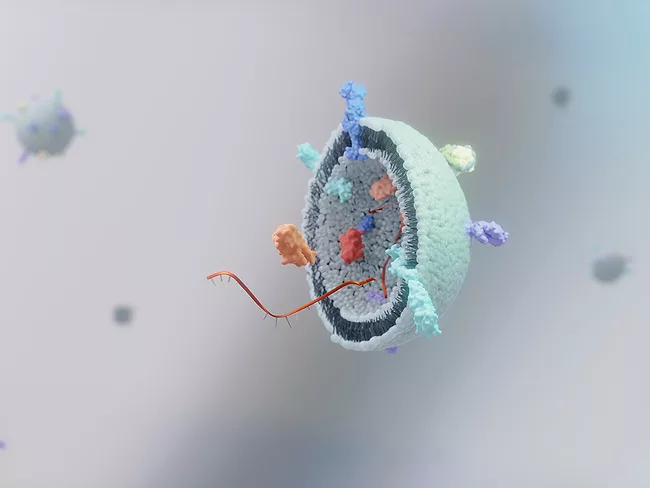
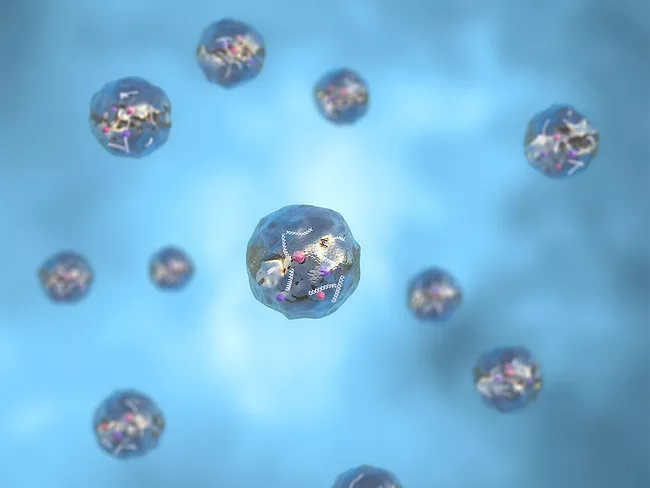
Extracellular vesicles (EVs) are nanosized membrane vesicles released from a variety of cells that play important roles in cell-cell communication and which circulate in almost every body fluid, including blood, urine and cerebrospinal fluid (CSF).