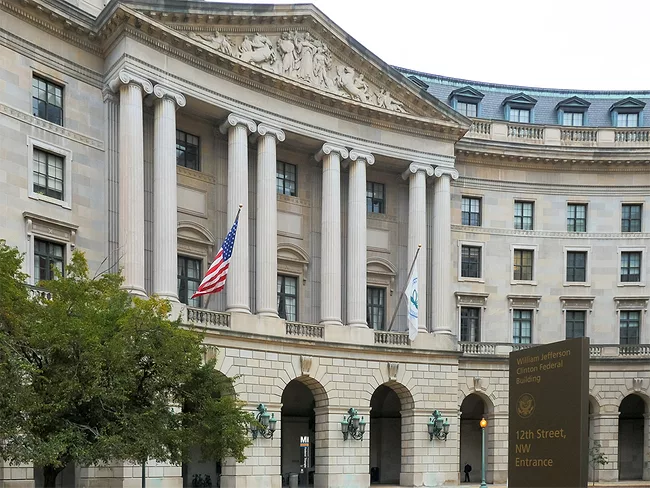
The response from industry regarding the Environmental Protection Agency’s (EPA) draft rule for ethylene oxide (EtO) varied considerably, but the Advanced Medical Technology Association (Advamed) argued a fundamental methodological point in its comments to the docket. Advamed’s Ruey Dempsey said the EPA approach to determining safe levels of EtO relies on “a single epidemiological study,” an approach Dempsey said has drawn fire from the National Academies of Science.
The U.S. Environmental Protection Agency (EPA) has posted an advanced notice of proposed rulemaking for control of ethylene oxide emissions (EtO), which would update a 2006 final rule that declared no additional controls for EtO were necessary. However, the agency’s latest proposed rule makes note of several technological advances that allow for greater control of EtO, a fact that could drive a greater regulatory requirement for containment and destruction of EtO emissions at medical device sterilization plants.
The FDA has posted the names of the companies that will take part in the ethylene oxide (EtO) challenge in response to the recent state action against EtO device sterilization sites, but the agency also has opened a pilot program for a streamlined notification process for changes to sterilization that should be faster and leaner than the usual PMA supplement.
The U.S. FDA's two-day advisory hearing on industrial ethylene oxide (EtO) sterilization of medical devices wrapped up with a discussion of how duodenoscopes can be made safer. The conclusion was largely that employee churn, training and work conditions were the biggest challenges – issues over which the FDA has nearly zero leverage.
The first day of the FDA's two-day hearing on ethylene oxide (EtO) sterilization of medical devices addressed several alternatives to EtO, but the advisory panel had little advice to offer the agency other than to encourage tweaks to sterilization procedures in order to get past the immediate problem.