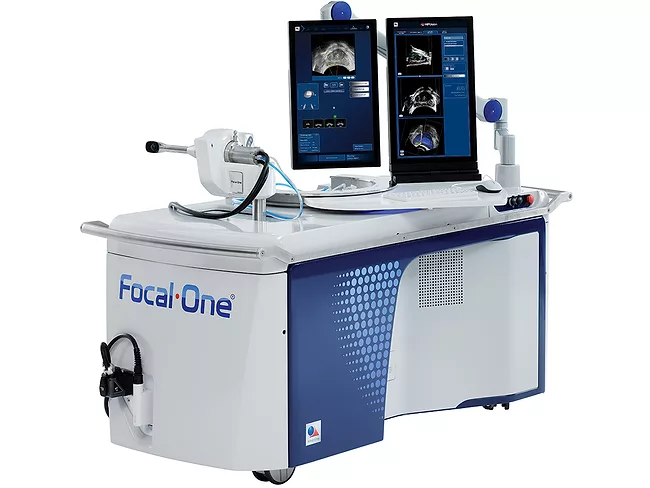
Edap TMS SA recently published data showing that its Focal One high intensity focused ultrasound technology is non-inferior to radical prostatectomy as a first-line treatment for localized prostate cancer. The company is also working towards gaining approval for the technology as a therapy for endometriosis.
Candel Therapeutics Inc. followed this spring’s positive phase II data in pancreatic cancer with favorable results from a phase III study testing the same drug – viral immunotherapy CAN-2409 – in localized prostate cancer. Shares of Needham, Mass.-based Candel (NASDAQ:CADL) closed Dec. 11 at $7.75, up $3.14, or 68%.
Researchers from AUTOTAC Bio Inc. and affiliated organizations presented preclinical data for ATC-324, a novel autophagy-targeting chimera (AUTOTAC) designed to induce androgen receptor (AR) degradation.
Janux Therapeutics Inc. CEO David Campbell said the firm will be talking with the U.S. FDA about “what we may or may not be able to do [in order to get JANX-007] to patients more rapidly,” though he noted that the agency has “primarily been focused on overall survival” in considering prostate cancer drugs, so more work on that endpoint may be required. “We’ll keep that in mind,” he said.
Cancer Targeted Technology LLC has been awarded the phase I portion ($400,000) of a fast track phase I/II ($2.4 million) Small Business Innovation Research (SBIR) grant by the National Cancer Institute (NCI) to develop CTT-2274 to treat metastatic prostate cancer.
Poseida Therapeutics Inc. has updated progress made in its early-stage pipeline of differentiated T stem cell memory cell-rich allogeneic CAR T therapies in oncology and autoimmune diseases.
Antelope Surgical Solutions Inc. has received commercial IND approval from the FDA for its novel prostate cancer technology, AS-1986NS. AS1986NS, a fluorescent and lutetium-175 bearing drug, will be evaluated in trials with the aim of addressing prostate cancer identification and surgical margin delineation.
The University of Wisconsin-Madison has synthesized a next-generation prostate-specific member antigen (PSMA)-targeting small molecule, ART-101, for the treatment of advanced prostate cancer.
Shares of Essa Pharma Inc. tanked Nov. 1 after the company said it is terminating all trials of masofaniten, its N-terminal domain androgen receptor inhibitor and sole clinical-stage program, following a disappointing readout from a phase II study in metastatic castration-resistant prostate cancer. The stock (NASDAQ:EPIX) hit a 52-week low, closing at $1.40, down $3.80, or 73%.
Cellbion Co. Ltd. debuted on the tech-heavy Kosdaq board of the Korea Exchange Oct. 16, with share prices closing upward at ₩20,650 (US$14.94) – outdoing its initial price of ₩15,000 per share for 1.9 million shares.