Paige has received good news in the EU, securing a CE mark for its breast cancer detection software that highlights suspicious areas for pathologists to review further. It also received a CE mark for Paige Prostate Grading & Quantification, which offers slide level information for primary and secondary Gleason patterns and tumor size to inform treatment planning.
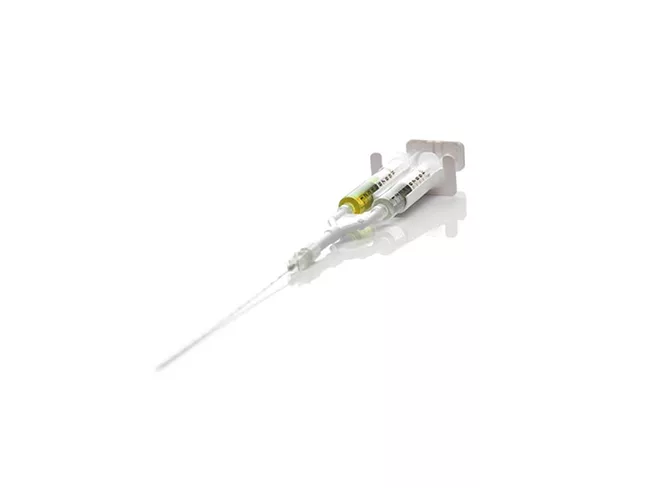
Boston Scientific Corp. reported that it has initiated the nationwide U.S. launch of Spaceoar Vue Hydrogel, a radiopaque version of Spaceoar Hydrogel that enables the use of computerized tomography scans instead of requiring magnetic resonance imaging (MRI) for patients undergoing radiation for prostate cancer.
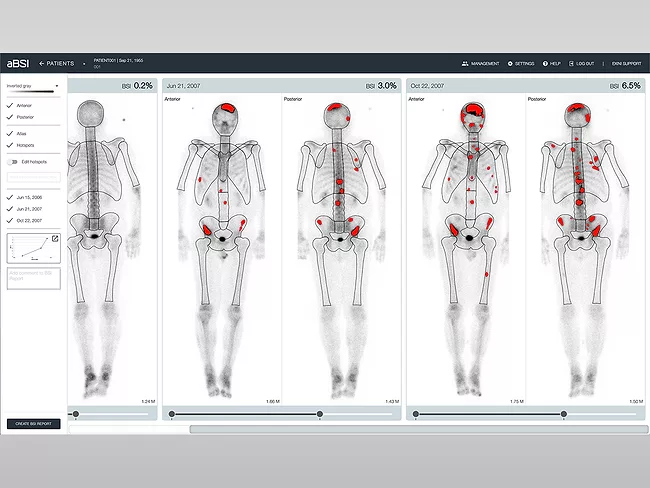
The U.S. FDA granted 510(k) clearance to Lantheus Holdings Inc.'s artificial intelligence (AI)-enhanced automated bone scan index (aBSI) product for prostate cancer on GE Healthcare's Xeleris platform. ABSI improves quantification and management of disease progression in advanced prostate cancer patients.
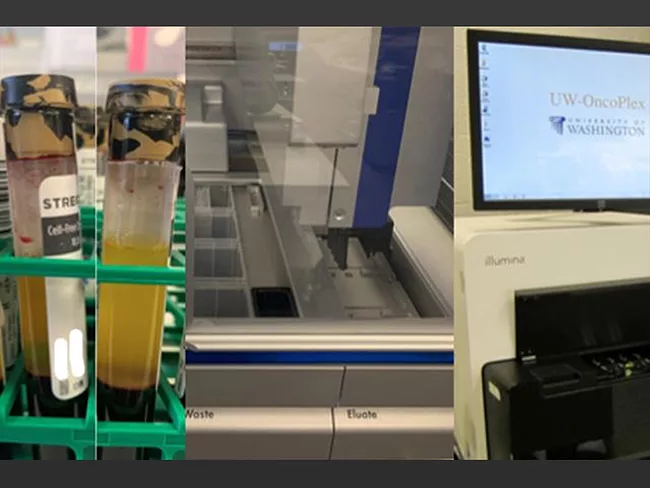
The use of liquid biopsies, tests that look for variants in cell-free DNA (cfDNA) shed by tumors into blood plasma, could lead to misdiagnosis and inappropriate treatment in many cancers, according to University of Washington researchers. The tests misidentified a noncancer mutation that is particularly common in older people as a mutation used as a biomarker for PARP inhibitors indicated for use in prostate cancer, a study published in JAMA Oncology found, but the problem likely extends to other malignancies.
PERTH, Australia – Melbourne-based Telix Pharmaceuticals Ltd. has linked up with Hong Kong-listed China Grand Pharmaceutical and Healthcare Holdings Ltd. (CGP) in a licensing and commercial deal worth AU$400 million (US$285 million) plus sales royalties.
The U.S. FDA cleared Ezra AI Inc.'s artificial intelligence (AI) system for prostate cancer and its cloud-based picture archiving and communication system (PACS) that enables radiologists to use the Prostate AI from their browser. The New York-based company’s Prostate AI is the first prostate-focused artificial intelligence system to gain clearance. The Prostate AI accurately quantifies prostate volume, lesion size, and renders 3D volumes of the prostate gland and lesions.
PERTH, Australia – Melbourne-based Telix Pharmaceuticals Ltd. has submitted its first new drug application to the FDA for TLX591-CDx, a radiopharmaceutical targeting prostate-specific membrane antigen (PSMA) for imaging prostate cancer using positron emission tomography (PET).
With a Dec. 20 PDUFA date bearing down on relugolix from Myovant Sciences GmbH, of Basel, Switzerland, freshly released and slightly downbeat secondary endpoint phase III data created a rift with management and analysts on one side and investors on the other.
PERTH, Australia – Melbourne-based Telix Pharmaceuticals Ltd. has submitted its first new drug application to the FDA for TLX591-CDx, a radiopharmaceutical targeting prostate-specific membrane antigen (PSMA) for imaging prostate cancer using positron emission tomography (PET).
With the PDUFA date for relugolix against prostate cancer growing nearer and data in castration resistance-free patients closer still, Myovant Sciences GmbH aims to wring more from the oral, once-daily gonadotropin-releasing hormone receptor antagonist, studying it in uterine fibroids and endometriosis.