Grove Biopharma Inc., a spinout from Northwestern University targeting intracellular protein-protein interactions with a novel synthetic biology-based approach, has closed a $30 million series A financing. Proceeds will be used to further advance Grove Biopharma’s Bionic Biologics platform and drive its lead oncology programs toward the clinic.
Researchers at Provincial Health Services Authority and University of British Columbia have synthesized radiolabeled peptides targeting gastrin-releasing peptide receptor (GRPR) reported to be useful for the diagnosis and treatment of cancer.
Shanghai Jemincare Pharmaceuticals Co. Ltd. has identified androgen receptor antagonists reported to be useful for the treatment of cancer, alopecia, acne, hirsutism, polycystic ovary syndrome, precocious puberty, spinal and bulbar muscle atrophy, and age-related macular degeneration.
U.K. scientists developed a saliva-based test which better predicts the risk of prostate cancer than current prostate-specific antigen (PSA) blood tests by analyzing DNA to look for genetic variants linked to prostate cancer and calculating a polygenic risk score.
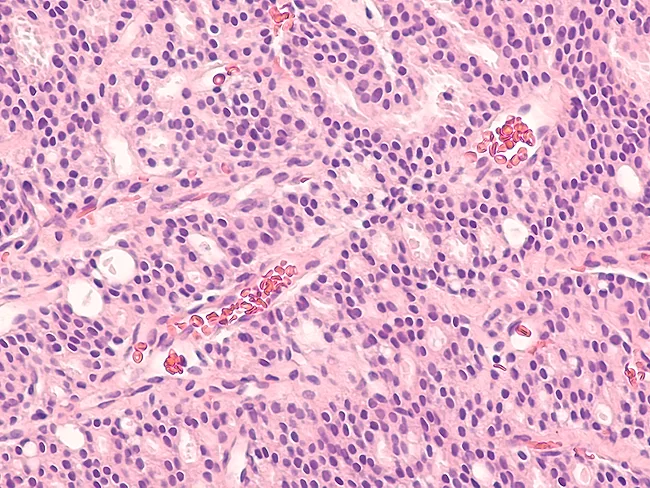
Neuroendocrine prostate cancer (NEPC) is the most aggressive form of prostate cancer, responsible for up to 20% of therapy-resistant cases and associated with rapid disease progression. It is characterized by a loss of typical androgen receptor signaling, conferring antiandrogen therapy resistance, and abnormal expression of neuroendocrine markers, along with small cell morphology.
Sumitomo Pharma Co. Ltd. announced that it will sell off two more of its subsidiaries, Sumitomo Pharma (China) Co. Ltd. and Sumitomo Pharma Asia Pacific Pte. Ltd. (and their subsidiaries), to Marubeni Global Pharma Corp. April 1, as the Japanese pharma continues restructuring efforts from last year.
Sumitomo Pharma Co. Ltd. announced that it will sell off two more of its subsidiaries, Sumitomo Pharma (China) Co. Ltd. and Sumitomo Pharma Asia Pacific Pte. Ltd. (and their subsidiaries), to Marubeni Global Pharma Corp. April 1, as the Japanese pharma continues restructuring efforts from last year.
Filamon Pty. Ltd. has described lysosomal targeting peptides (LYTAPs) acting as EGFR (HER1; erbB1) degradation inducers reported to be useful for the treatment of cancer.
Actinium Pharmaceuticals Inc. has unveiled ATNM-400, a novel non-PSMA-targeting, first-in-class radiotherapy for prostate cancer utilizing the Actinium-225 (Ac-225) radioisotope.
The U.S. FDA’s approval of Telix Pharmaceuticals Ltd.’s kit for preparing prostate-specific membrane antigen-PET imaging for prostate cancer widens the opportunities for patients who live far away from large hospitals. The FDA’s nod for the imaging agent, TLX007-CDx, now branded as Gozellix, has a long shelf life and needs less equipment and preparation compared to some other agents.