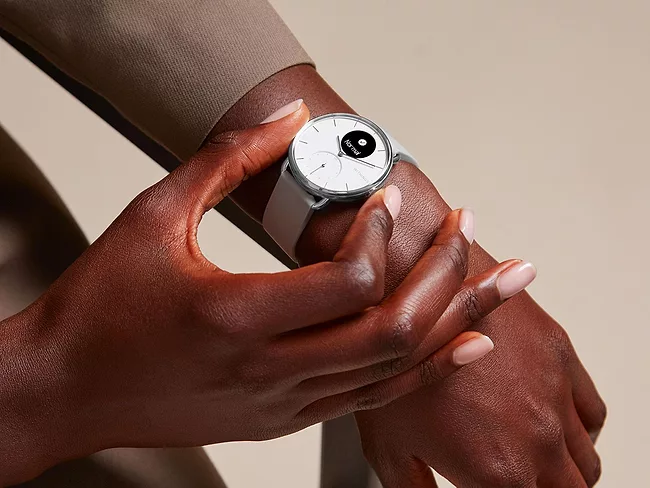
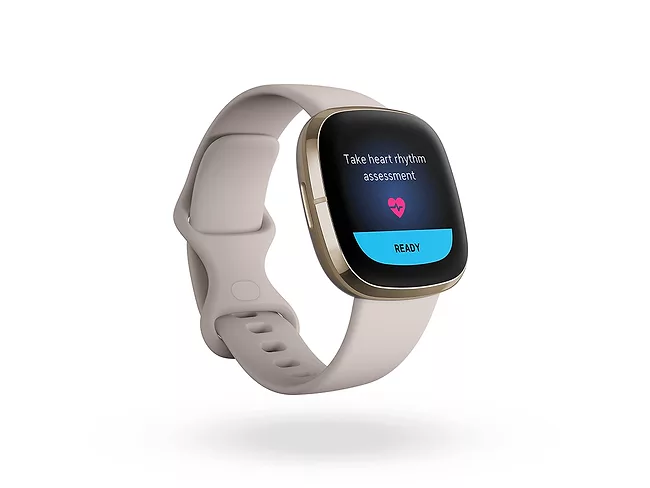
This year saw continued advances in smartwatches as they increasingly move from wellness assistants to medical monitors. Nowhere has that been clearer than in cardiovascular health, where multiple wearables now allow users to quickly detect atrial fibrillation, a notoriously shy condition previously only detectable in early stages by chance in a physician’s office or by wearing a cumbersome Holter monitor for 24 to 48 hours.
Vuno Inc. has received its third breakthrough device designation from South Korea’s Ministry of Food and Drug Safety (MFDS), for its artificial intelligence (AI)-based electrocardiogram (ECG) analysis software Vuno Med DeepECG. Vuno is the first company to have three such designations to its name. “We developed Vuno Med DeepECG via long-term ECG data analysis research. With this breakthrough designation, we target expanding our market share in the medical AI industry via our bio-signal businesses. Among these is ECG data, which can help diagnose various heart diseases and has high potential,” Yeha Lee, chairman at Vuno, told BioWorld.
Alivecor Inc. has elevated its patent dispute with Apple Inc. to the U.S. International Trade Commission (ITC) in a move that could damage the latter’s foray into digital health. Alivecor is alleging that Apple, of Cupertino, Calif., has infringed on Alivecor patents for electrocardiogram monitoring technology, a development that may foreshadow a continuing legal struggle between the two companies for a large and rapidly growing market.
The U.S. FDA has granted breakthrough device designation to Tempus Inc. for its ECG Analysis Platform. Developed in collaboration with Geisinger, the artificial intelligence (AI)-powered platform helps clinicians identify patients at increased risk of developing atrial fibrillation (AF) or atrial flutter.
Fitbit Inc. and Apple Inc. picked up the pace in their race to put health monitoring apps on wrists everywhere with Fitbit gaining 510(k) clearance from the U.S. FDA for its new ECG app for the Fitbit Sense and Apple revealing the blood oxygen sensor built into its Series 6 watch this week. The new apps join a growing array of technological advances that permit wearable devices to track and record a range of health metrics.