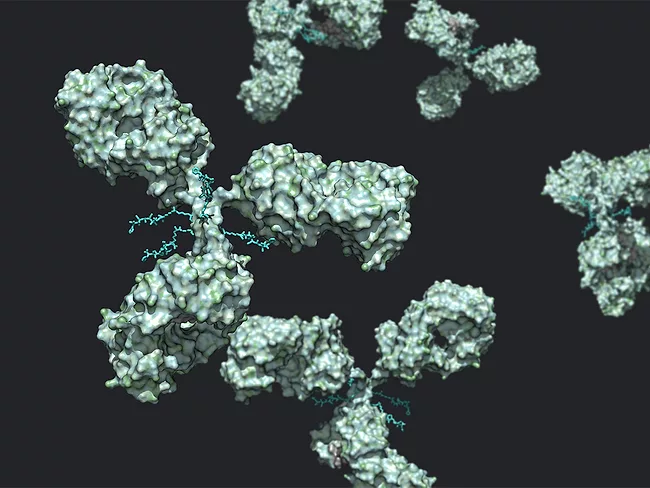
Lantern Pharma Inc. has generated a new class of highly specific and highly potent antibody-drug conjugates (ADCs) with a cryptophycin drug-payload, in collaboration with Bielefeld University.
Researchers at Oncopia Therapeutics Inc. (Proteovant Therapeutics Inc.) and University of Michigan have divulged conjugates comprising a cereblon (CRBN) E3 ubiquitin ligase-binding moiety coupled to an estrogen receptor (ER) or zinc finger protein Helios (IKZF2) and/or zinc finger protein Aiolos (IKZF3) moiety through a linker.
Researchers from National Taiwan University combined the structural features of purine-type microtubule-disrupting compounds and histone deacetylase (HDAC) inhibitors, which led to the discovery of a novel series of dual-targeting compounds, with the purine-hydroxamate conjugate [I] selected as the lead candidate.
The University of Texas MD Anderson Cancer Center and C-Biomex Ltd. have announced a strategic research collaboration agreement to co-develop CBT-001, a radioligand targeting the CA9 cancer biomarker.
Taipei-based precision oncology firm Anbogen Therapeutics Inc. drew $12.5 million in a series A funding round to propel two major clinical assets in its cancer pipeline.
Taipei-based precision oncology firm Anbogen Therapeutics Inc. drew $12.5 million in a series A funding round to propel two major clinical assets in its cancer pipeline.
Around 75% of breast cancer cases in postmenopausal patients show estrogen receptor (ER) expression. There is a need for new long-acting formulations for selective estrogen receptor degradation inducers (SERDs) because the efficacy of current options, such as the approved SERD fulvestrant, is limited due to poor solubility and stability.
Phyllodes tumors (PTs) are rare, fibroepithelial tumors of the breast that can arise as benign, borderline or malignant. Little is known about the molecular mechanisms behind their occurrence, and it is easy to misdiagnose them as other histologically similar tumors, such as metaplastic breast cancer. It was hypothesized that DNA methylation could be a helper here.
Chengdu Easton Biopharmaceuticals Co. Ltd. has identified cyclin-dependent kinase 7 (CDK7) inhibitors reported to be useful for the treatment of cancer.